|
|
| |
|
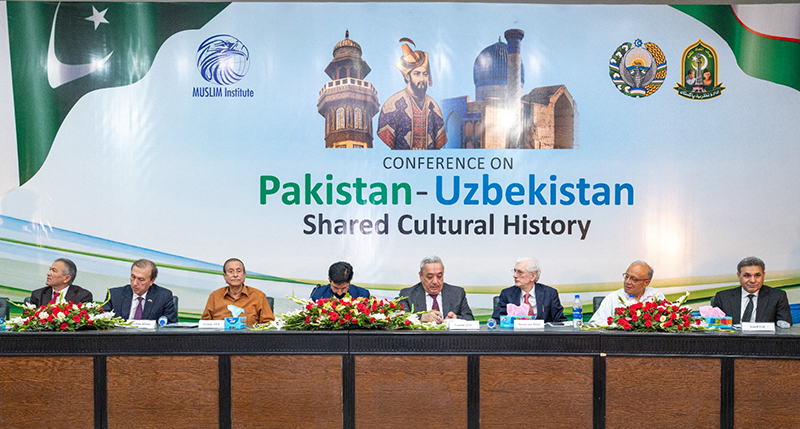
MUSLIM Institute organized a conference titled “Uzbekistan–Pakistan Shared Cultural History” on September 24, 2025, at Idara-i-Nazaria-i-Pakistan, Lahore,
in collaboration with the Embassy of Uzbekistan, Islamabad, and Idara-i-Nazaria-i-Pakistan. Sahibzada Sultan Ahmed Ali, Chairman of the MUSLIM Institute,
chaired the session. Distinguished speakers included the delegation from the Academy of Sciences of Uzbekistan, comprising Prof. Azamat Ziyo, Director of
the Institute of History, and Dr. Botir Yuldashev, Research Fellow at the same institute. Other eminent speakers were Mian Farooq Altaf, Senior Vice President,
Idara-i-Nazaria-i-Pakistan; Prof. Humayun Ihsan, Dean, Pakistan College of Law; Mr. Rovshan Alimov, Deputy Head of Mission, Embassy of Uzbekistan, Islamabad; Khalifa Zaki Uddin,
descendant of a notable family from Bukhara; and Muhammad Hanif Gul, Chief Safety Officer, Pakistan Railways. The proceedings were moderated by Mr. Asif Tanveer Awan, Public Relations Associate, MUSLIM Institute.
Brief Summary of the remarks shared by speakers are observed as under:
|
| |
|
Guest
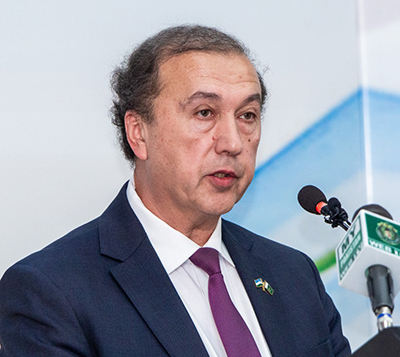
Mr Rovshan Alimov
Deputy Head of Mission - Embassy of Uzbekistan in Islamabad
|
|
Uzbekistan and Pakistan are united by a profound historical, cultural, and spiritual legacy. Both nations are bound by the heritage of Amir Timur and the Timurid dynasty, as well as by the legacy of Zahiruddin Muhammad Babur, founder of the Baburid (Mughal) Empire. The timeless works of Alisher Navoi and Abdur Rahman Jami, along with the powerful poetry of Allama Muhammad Iqbal, create a spiritual bridge between our peoples.
Cities like Samarkand, Bukhara, and Khiva, together with Lahore, Multan, and Karachi, are not only geographical spaces but centers of Islamic civilization and intellectual history. Moreover, there is an enduring influence of Sufi figures such as Jalaluddin Rumi and Sultan Bahoo, whose teachings continue to shape the spiritual consciousness of our societies, promoting unity, love, and harmony.
Our cultural diplomacy is not just about preserving the past; it is about shaping a collective future. We are witnessing expanding cooperation between academic institutions, youth exchange programs, and joint cultural festivals between both countries.
Such conferences would lead to even more meaningful projects, including:
- Joint research centers in history, theology, and linguistics
- Cultural exchange programs for youth
- Artistic collaboration in cinema, music, literature, and theater
- Co-produced books and films
- Restoration of shared historical sites
- Development of cultural tourism routes, especially along the Silk Road etc
|
|
|
Guest
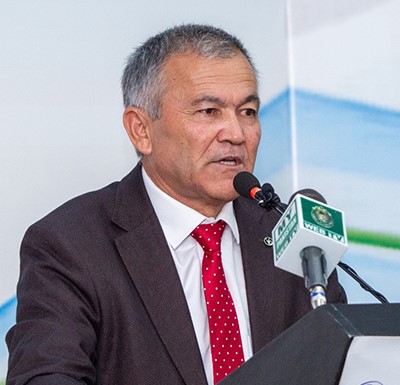
Dr. Botir Yuldashev
Research Fellow - Institute of History, Uzbekistan Academy of Sciences
|
|
Lahore, as widely known, is indeed a historic city; a cultural and civilizational hub. Its name appears not only in the Baburnama and Humayunnama but also in many ancient manuscripts. The great scholar Abu Raihan al-Biruni, from the region of modern-day Uzbekistan, visited Lahore and mentioned it in his writings, referring to the people as “Lahori.” This historical connection is deeply significant.
Zahiruddin Muhammad Babur was not only a ruler but also a historian. He wrote in the Uzbek language and made numerous references to Lahore.
In 1520, Babur took Lahore as part of his campaign and, two years later, Delhi. He understood the strategic importance of the city.
 It is also important to briefly mention other significant historical figures, such as Dilawar Khan and local governors, who played roles in the city’s administration during that era. Humayunnama, written by Gulbadan Begum — Babur’s daughter — is another important work. She also visited Lahore and documented significant events that took place there.
|
|
|
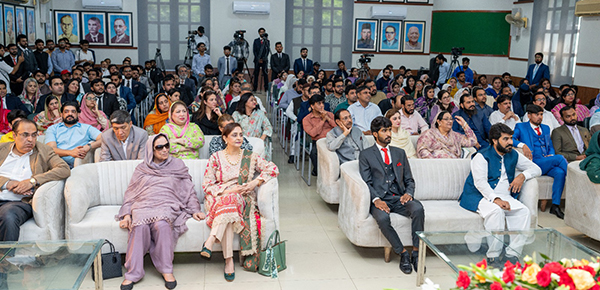
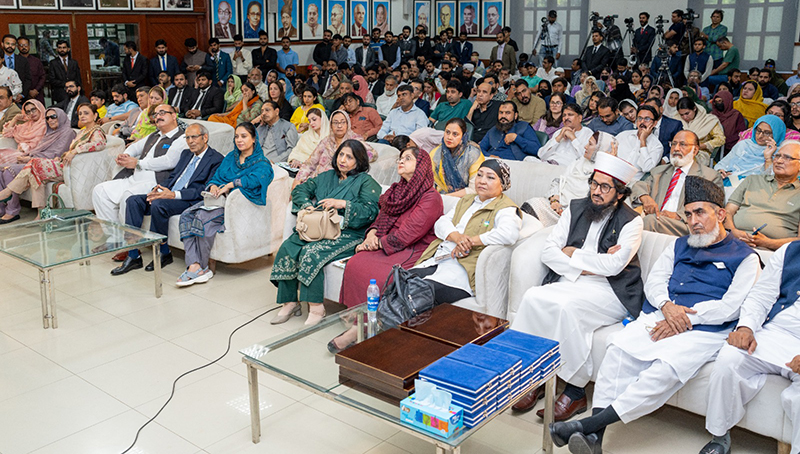
Audience during the session of conference.
|
|
|
|
Guest
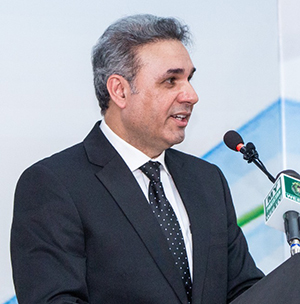
Mr. Muhammad Hanif Gul
Chief Safety Officer - Pakistan Railways
|
|
Uzbekistan is a large country in Central Asia and its second-largest economy. Similarly, Pakistan is the second-largest country and economy in South Asia. If both nations revive their historical and cultural ties, they can reap tremendous mutual benefits. Current bilateral trade is around USD 400 million however, this remains far below the actual potential. Both governments have agreed to increase it to USD 1 billion in the first phase and USD 2 billion in the second.
To realize this ambition, institutional frameworks must be strengthened; especially in logistics and infrastructure. Trade cannot flourish without state-of-the-art facilities such as ports, highways, and railways. Unfortunately, instability in Afghanistan remains a major obstacle to connectivity. However, Uzbekistan has been linked to Mazar-e-Sharif through a railway line since 2011. Recently, the governments of Pakistan and Uzbekistan agreed to extend a new 677-kilometre railway line from Pakistan to Mazar-e-Sharif via Kabul. The feasibility study will be jointly funded as 50% by each country. This is a strategic and encouraging development that could transform regional trade and connectivity.
Currently, there are over 130 joint ventures involving Pakistani entrepreneurs operating in Uzbekistan. Both countries are active members of the SCO, OIC, and ECO, providing multiple platforms to strengthen cooperation.
|
|
|
Guest
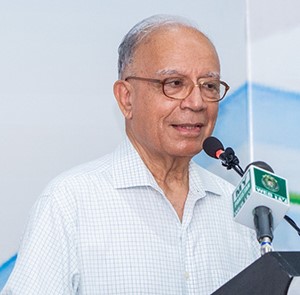
Khalifa Zaki ud Din
A descendant of a notable family from Bukhara
|
|
My ancestral roots of a prominent Lahore family trace back to Bukhara. My great ancestor, Maulvi Ghulam Farid established an educational institution that soon became a beacon of learning. His two sons, Maulana Ghulam Rasool and Maulana Ghulam Ullah, continued his mission with dedication.
Maulana Ghulam Ullah’s son, Qazi Khalifa Hameeduddin, emerged as one of the greatest scholars and jurists of his era. He served as the Chief Qazi of Lahore. Under his leadership, Anjuman-e-Himayat-e-Islam was founded, and he became its first president. His son, Khalifa Imaduddin, continued the legacy of leadership and scholarship. The next generation produced an extraordinary figure Dr. Khalifa Shujauddin who was a close companion of Allama Iqbal. In 1933, when Iqbal founded the Islamic Research Council, he appointed Dr. Shujauddin as its first Secretary.
This multigenerational legacy illustrates how deep and enduring the intellectual, spiritual, and cultural ties between Uzbekistan and the subcontinent truly are; founded not merely on lineage, but on shared values of knowledge, sacrifice, and service. It stands as a powerful reminder for future generations of the importance of education and honesty.
|
|
|
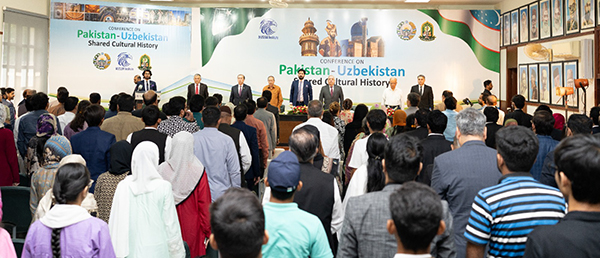
Audience view of conference.
|
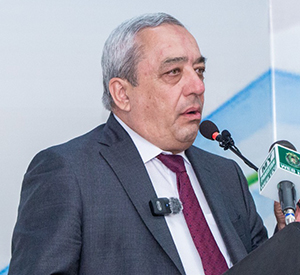
|
Guest
Prof. Azamat Ziyo
Director of the Institute of History
|
|
Great minds like Mirza Abdul Qadir Bedil, Mirza Ghalib, and Emperor Babur all came from Turkestan and enriched the land of subcontinent with knowledge, poetry, art, and civilization. Even in Uzbekistan, there is a street named after Mirza Ghalib; a symbol of how deeply our cultural bonds are woven together.
There is a need to establish Pakistan-Uzbekistan Center for Babur Studies, dedicated to researching and preserving the intellectual, cultural, and historical legacy of the Babur dynasty. This center could bring together scholars and students from both nations to study manuscripts, catalog them digitally, and create a comprehensive database of the Babur era’s political, social, and cultural heritage. The manuscripts are scattered across Iran, Turkey, Iraq, Egypt, India, Pakistan, and Europe. This center would collect their records, compile their catalogs, and publish them in digital form so that future generations may continue to learn from our shared history. Through this academic and cultural collaboration, we can present to the world the magnificent contribution of Uzbek and Pakistani civilizations to human progress.
The timeless heritage of Lahore seen in monuments like the Lahore Fort, Shish Mahal, and
Badshahi Mosque surpasses even the grandeur of Rome, Andalusia, and Paris, reflecting the
beauty, wisdom, and philosophy of the ancestors while deepening love for the homeland and
the spirit of patriotism. Yet true progress requires more than admiration; it demands knowledge,
hard work, and determination, the very values that built Pakistan and will continue to strengthen
the friendship between our nations.
|
|
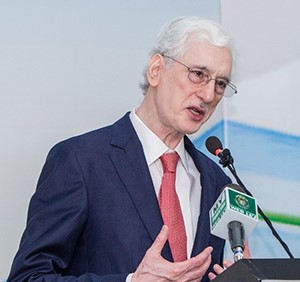
|
Guest
Prof. Humayun Ehsan
Dean - Pakistan College of Law
|
|
Not everyone is born a scholar of the sciences, nor does every soul belong to a single soil. Whatever exists today is the result of the great caravans that once passed through these lands; sages, scholars, travelers, and spiritual guides who journeyed from the north, leaving behind trails of knowledge and civilization that shaped our very being.
In the subcontinent, societies have often looked north for leadership. Whenever challenges have arisen from the south, strength and guidance have been found in the north. Therefore, it is fitting to say to the Uzbek nation: congratulations; you stand as the representatives of the North in history and in spirit.
The relationship between Pakistan and Uzbekistan must extend beyond embassies and formal diplomacy. This bond is not merely diplomatic; it is civilizational and tied to identity. Diplomats will continue to play their role, but what connects these nations is far deeper; a natural and spiritual connection that has always existed between the peoples of both lands.
This is the philosophy of the Functional East and Neo-Functionalism; a philosophy of integration and global cooperation. Its first principle is the Principle of Common Denominator: to seek what unites before addressing what divides. Just as the great pyramids were built on shared foundations strong enough to endure time, cooperation must be built on common values; the shared denominators of history, culture, and faith.
|
|
|
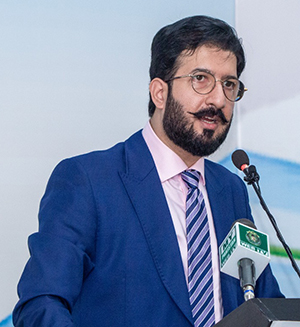
|
chaired remarks
Sahibzada Sultan Ahmed Ali
Chairman MUSLIM Institute
|
|
When one speaks of the ties between Pakistan and Uzbekistan, one is not merely referring to two modern nation-states. We are, in truth, recalling the communion of civilizations; the transmission of knowledge, art, faith, and philosophy that has journeyed for centuries between Samarkand, Bukhara, and Lahore.
It must be remembered that these lands were never apart; the ancient Central Asian trade route was not just a trade corridor but a spiritual and intellectual artery connecting the ancestors of both regions. The flow of ideas that began in the madrasas of Bukhara and Samarkand found its way into the institutions of Lahore and Multan. The spiritual fragrance of Naqshband, the wisdom of Bahauddin Zakariya, and the devotion of Data Ganj Bakhsh, all share a single pulse.
There is deep inspiration in the shared spiritual heritage — the profound influence of Sufism — which continues to serve as a bridge between hearts. From Bahauddin Naqshband to Khwaja Moinuddin Chishti, from the khanqahs of Bukhara to the shrines of Lahore, Sufism has taught tolerance, love, humility, and service to humanity. This moral compass is what the modern world needs most. Therefore, the establishment of a joint center for Sufi studies should be explored, a collaborative academic and spiritual initiative where scholars from both nations may study, teach, and publish on the shared mystic traditions of Central and South Asia. Such an endeavor would not only deepen understanding of the past but also provide spiritual guidance for the future.
|
|
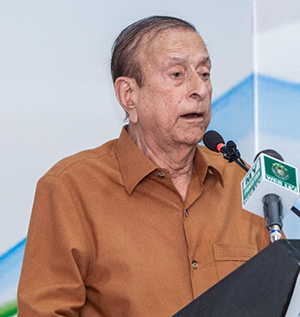
|
Guest
Mian Farooq Altaf
Senior Vice President Idara-i-Nazaria-i-Pakistan
|
|
When history is reflected upon, it becomes clear that after Muhammad bin Qasim, the most significant conquerors to enter the Indian subcontinent came from Uzbekistan, Afghanistan, and Turkiye.
The first of these rulers from Uzbekistan arrived nearly four hundred years before Emperor Zahir-ud-Din Babur, who himself came from the region of Fergana. About four centuries after those early rulers, the Mughal dynasty emerged compounding in nearly a millennium of Muslim rule over the Indian subcontinent.
From the regions of Central Asia, especially Uzbekistan, came some of the greatest saints, Sufis, scholars, and scientists in Islamic history. Sadly, in the early 20th century between 1918 and 1928, the Soviet Union invaded and occupied all the prosperous and advanced Muslim states of Central Asia.
Many communities in Pakistan today such as the Barlaas, Bukhari, Mirza, and Chughtai families trace their ancestry directly to Central Asia, particularly Uzbekistan. Many families proudly recognize that their forefathers, generations back, migrated from the Naqshband lineage of that region.
|
|
|
|
|
|
| |
|