November 6, 2025 Organised By MUSLIM Institute and Baku International Multiculturalism Centre
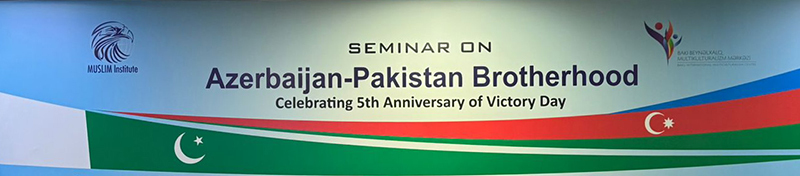
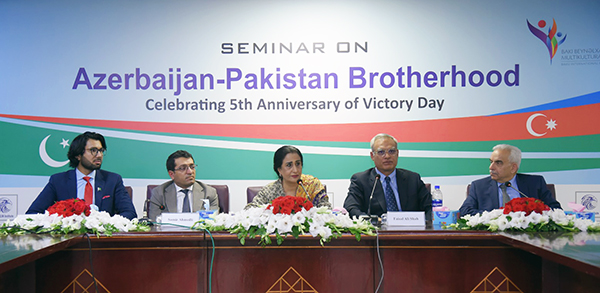
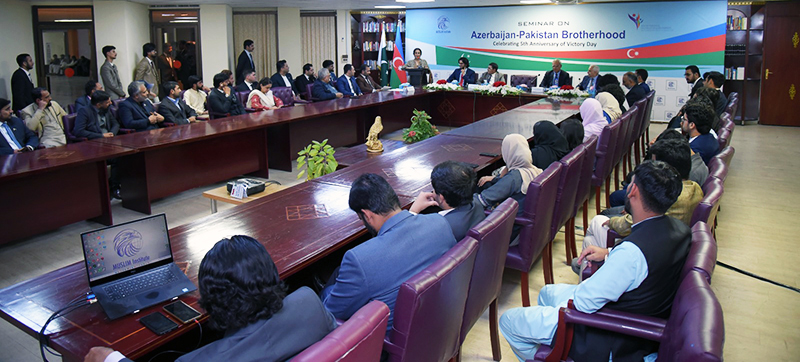
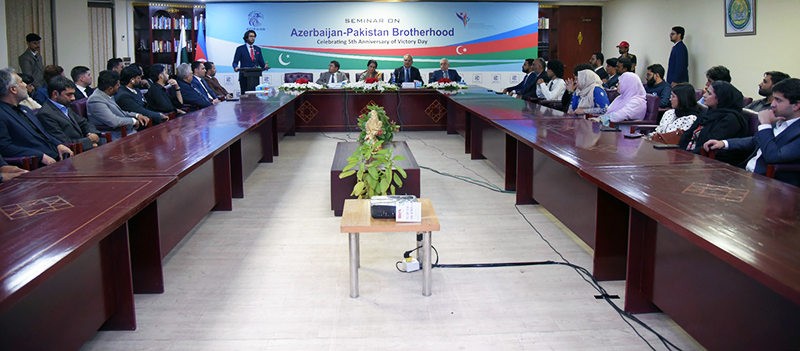
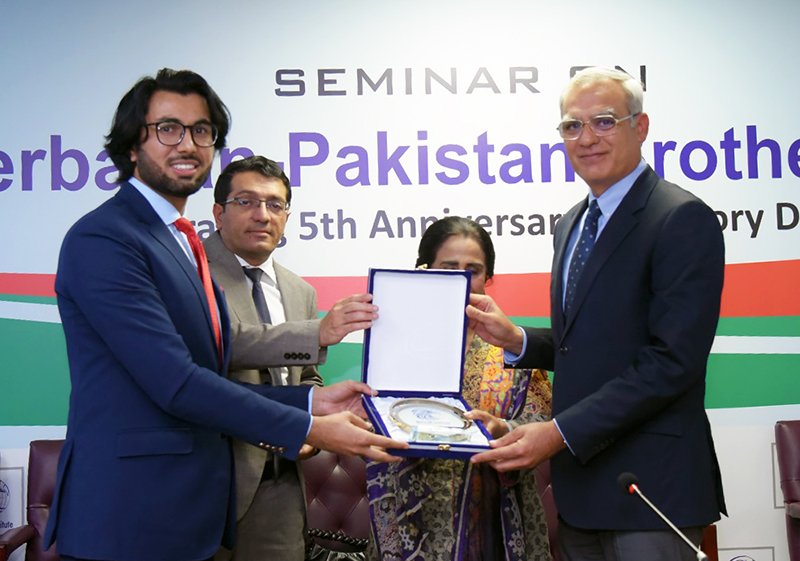
Seminar "Azerbaijan-Pakistan Brotherhood: Celebrating 5th Anniversary of Victory Day" organized by MUSLIM Institute and Baku International Multiculturalism Centre in Islamabad on November 6, 2025.
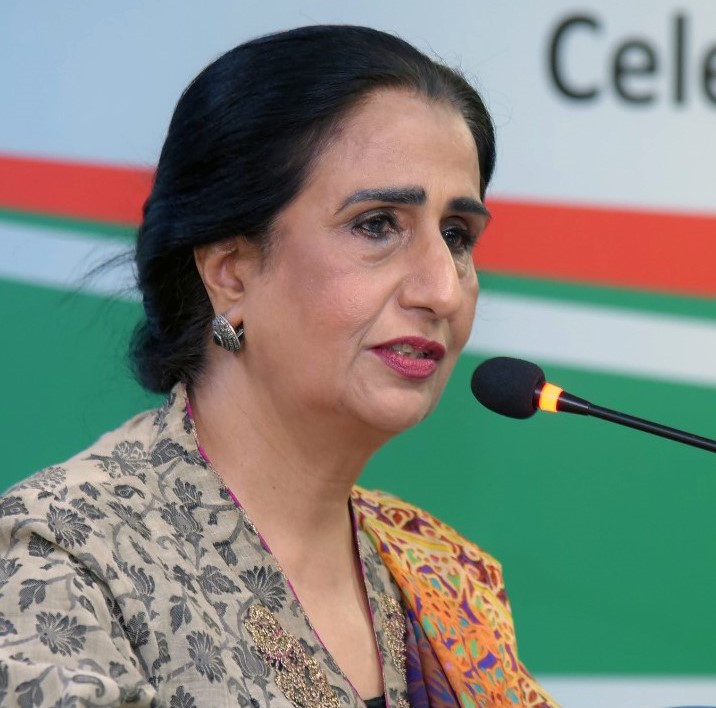
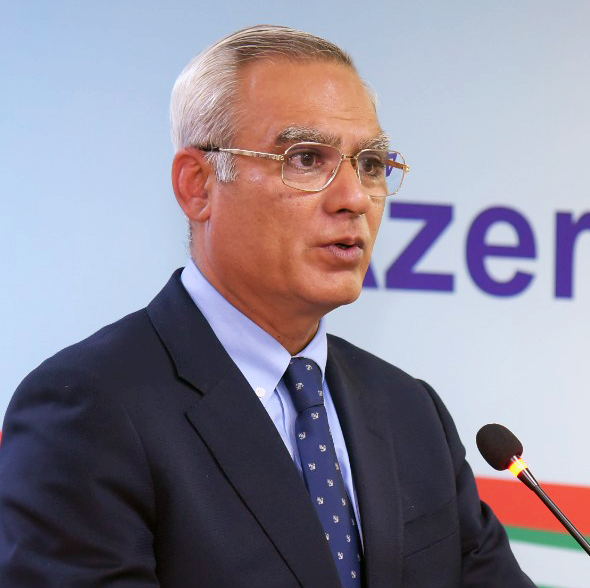
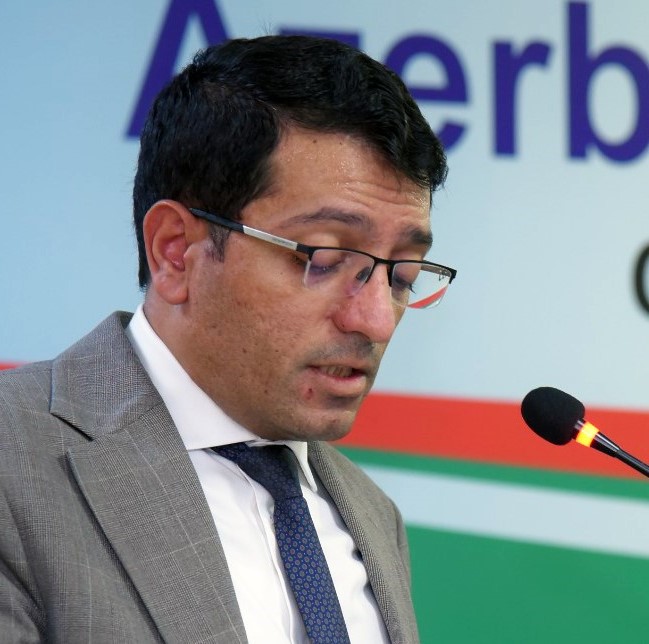
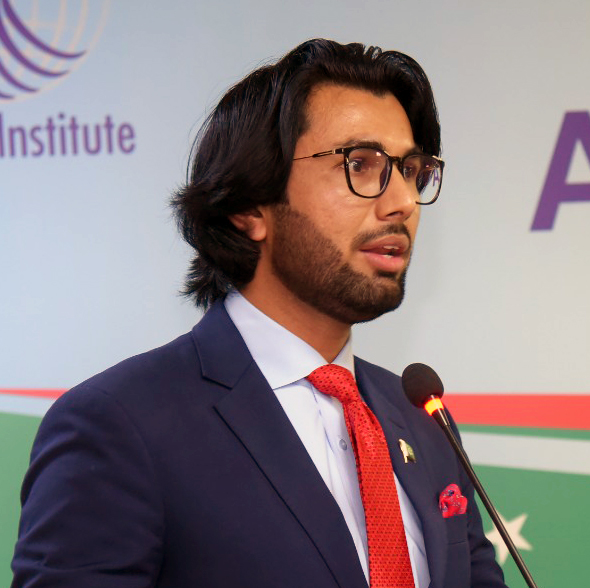
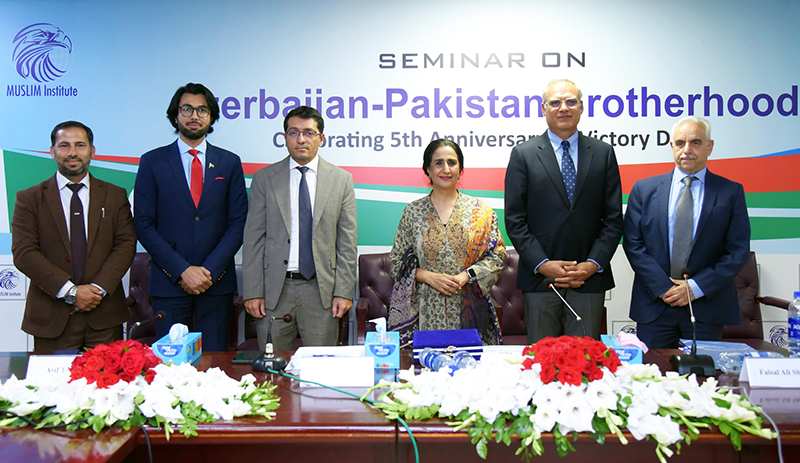
Ambassador Naela Chohan, Former Acting Foreign Secretary of Pakistan, chaired the session. Other speakers included Rear Admiral Syed Faisal Ali Shah, Hilal-e-Imtiaz, Dr. Taraq Waheed, Former Director,
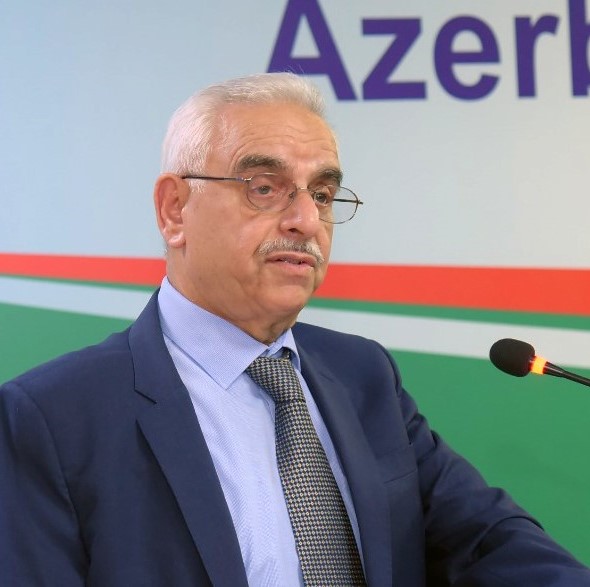
Foreign Services Academy, Islamabad, and Samir Ahmedli, Deputy Head of Mission, Embassy of the Republic of Azerbaijan, Islamabad and Malik Asif Tanveer Awan, Public Relations officer MUSLIM Institute.
The proceedings were moderated by Dr. Abdul Basit. Along with that, researchers, scholars, students, university professors, lawyers, journalists, social activists, and people from different walks of life participated in the seminar.
Honourable Speakers and Guests
Following Hounorable Speakers and Guests addressed the seminar.
Ambassador Naela Chohan
Former Acting Foreign Secretary of Pakistan Session Chaired
Syed Faisal Ali Shah
Rear Admiral Guest Remarks
Dr. Taraq Waheed
Former Director, Foreign Services Academy, Islamabad Guest Remarks
Samir Ahmedli
Deputy Head of Mission, Embassy of the Republic of Azerbaijan, Islamabad Guest Remarks
Malik Asif Tanveer Awan
Public Relations officer MUSLIM Institute Opening and Closing Remarks
Remarks by the Speakers
The Brief summary of the views shared by the speakers:
Azerbaijan and Pakistan are two Muslim countries that share unique historical, cultural, and religious commonalities, and these are the two countries that have always supported each other on national
and international forums. Azerbaijan always supported Pakistan on the Jammu & Kashmir issue, and Pakistan always supported Azerbaijan on the Karabakh issue. Pakistan, unlike many nations, refused to
recognize the occupying country out of loyalty to Azerbaijan—a rare act of moral integrity rooted in shared values of faith, justice, and freedom. Over the years, this moral alliance has grown into a
strategic partnership. The Pakistan-Azerbaijan-Turkiye relationship is described as deep and historic, rooted in emotional and ideological ties that trace back to movements such as the Khilafat Movement.
Today is Victory Day; this is not just a victory; this is the prime example of brotherhood among Pakistan, Azerbaijan, and Turkiye, which is very rare in the modern world.
Today marks the fifth anniversary of Victory Day, celebrated on November 8th, declared by President Ilham Aliyev to commemorate the liberation of Shusha. The liberation of
Azerbaijani lands was not just geopolitical but a moral and spiritual victory. As we celebrate Victory Day, it is important to remember the martyrs who made this success possible.
One of the most iconic structures restored in Shusha is the Yuhari Govhar Agha Mosque, originally built in 1855, showcasing
a profound commitment to cultural preservation. In 2022, Shusha was celebrated as the Capital of Azerbaijani Culture, followed
by its designation as the Culture Capital of the Turkic World in 2023. Now, it proudly holds the title of the Culture Capital of the Islamic World.
At its peak, Shusha played a pivotal role in international trade, particularly the silk trade. The city's architecture, including its trade centers and
caravanserais, reflects its historical significance in fostering economic and cultural exchanges.
Right after the Second Karabakh war in 2020, in every street, at every house, in markets, and in institutions, three flags were hanging together: Azerbaijan, Pakistan, and Turkiye. On September 27, 2020, Armenia began large-scale aggression, leading to the Second Karabakh War, which lasted 44 days and resulted in the liberation of more than 300 settlements, including Shusha, Jabrayil, Fizuli, Zangilan, Gubadli, and Menzhevan. The courage of the Azerbaijani army under the leadership of President Ilham Aliyev, Supreme Commander-in-Chief, opened a new era in Azerbaijan’s history. Pakistan stood side by side with Azerbaijan during the Second Karabakh War, and the political support and statements from Pakistan’s high-ranking officials gave additional strength to the Azerbaijani army.
During the Khojaly genocide in 1992, 106 women and children were massacred by Armenian forces. On September 24, 2020, during the 75th session of the UN General Assembly, President Ilham Aliyev warned the international community that Armenia was preparing for a new war against Azerbaijan. The 44-day Patriotic War concluded Armenia’s 30-year military aggression against Azerbaijan’s sovereignty and territorial integrity, restoring the fundamental rights of almost one million Azerbaijanis and implementing the relevant UN Security Council resolutions of 1993.
The Republic of Azerbaijan was first accepted as a member state of the Organization of Islamic Cooperation in December 1991 and later became a member of the United Nations in March 1992. In 1993, during Pakistan’s presence in the United Nations Security Council, Resolution 822 was adopted, condemning the occupation of Azerbaijani lands by Armenian armed forces and demanding their immediate withdrawal. This was followed by Resolutions 853, 874, and 884 with similar demands, and on March 14, 2008, the United Nations General Assembly adopted Resolution 62/242 reaffirming Azerbaijan’s sovereignty and territorial integrity.
After the conflict, Azerbaijan began large-scale construction work in liberated territories, building new cities and towns from scratch using modern urban planning and smart city and smart village concepts. Azerbaijan is promoting multiculturalism, peace, and interreligious dialogue through initiatives like the Baku Process and Peace for Culture. Significant progress has been made in the normalization process with Armenia through direct bilateral negotiations on a peace agreement, border demarcation, and confidence-building measures. Azerbaijan remains committed to promoting international peace, security, dialogue, and cooperation. Azerbaijan later demonstrated honorable behavior in the demarcation of boundaries to ensure sustainable peace in the region.
After 2023, when Azerbaijan regained control over the majority of the Nagorno-Karabakh region,
it offered a peace proposal to Armenia, which was finally signed as the Agreement on the Establishment of Peace
and Interstate Relations between the Republic of Armenia and the Republic of Azerbaijan. Azerbaijan’s approach
was notable because, despite having already achieved its military objectives, it pursued peace for the larger interest
of the region and for the people on both sides. The proposal included incentives for Armenia, such as trade and transit
opportunities and improved access to regional partners like Iran, Russia, and Turkey, as well as potential broader economic integration with the South Caucasus.
Azerbaijan preferred direct negotiations with Armenia, in a neutral country such as the UAE, rather than involving mediators. The peace proposal mandated two key demands from Armenia: the dissolution of the Minsk Group and the removal of the constitutional requirement to occupy Karabakh. The dissolution of the Minsk Group reflected that the conflict was completely resolved, while the constitutional amendment was aimed at preventing future aggressive maneuvers. Armenia is required to amend its constitution, which still contains territorial claims against Azerbaijan, as part of the peace conditions. Pakistan,
which had not recognized Armenia during the 30-year conflict, signed an understanding to establish diplomatic relations only this year, following the initial peace agreement between Azerbaijan and Armenia.
Azerbaijan now conducts international events and development activities in Karabakh, facilitates the return of displaced people, and demonstrates its rightful ownership of the territory. The handling of this conflict is highlighted as a model of consistency, justice, and diplomacy, offering pertinent lessons for Pakistan,
especially regarding the Kashmir dispute. President Aliyev’s principled stance on Kashmir reflects the greatness of this enduring solidarity.
Moreover, Mr. Rafael Huseynov, currently Deputy Speaker of the Azerbaijan National Assembly, called the Milli Majlis. He is a great friend of Pakistan. As he said, he came to know that Pakistan had not recognized Armenia only because of Azerbaijan, and there was no other reason. When he learned this, he issued the order that Pakistanis would not pay the museum fee.
In 1993, the first Azerbaijani delegation visited Islamabad, and an agreement was successfully negotiated overnight when communication was established in Farsi due to the lack of a common language. Since then, Pakistan and Azerbaijan have signed many agreements, including PTAs, TTAs, joint ministerial commissions, and cooperation in oil, gas, trade, and defense.
In July 2025, President Ilham Aliyev’s official visit to Islamabad reaffirmed the deep friendship between both nations, which continue to support each other at forums like the United Nations and OIC. The center also works to regenerate cultural, religious, and linguistic tolerance and to represent Azerbaijan as a hub of multiculturalism.
Their universities, including Baku State University and Azerbaijan National Languages University, have Urdu departments and teach the language with great enthusiasm. Their syllabus includes topics on historical relations with Pakistan to educate the young generation about this brotherhood.
In the Azerbaijan National Academy of Sciences, Director Veli Beliali established a Pakistan Center actively working on Pakistan, translating the works of Allama Muhammad Iqbal and other authors. Qazi Muhammad Ali once said that all citizens of Pakistan are equal without discrimination, and your president has emphasized that multiculturalism is both a state policy and a lifestyle in Azerbaijan.