A Seminar on 9th December - Genocide Prevention Day
Commemorating Genocides and Mass Atrocities against Muslim Populations
December 9, 2025 Organised By MUSLIM Institute
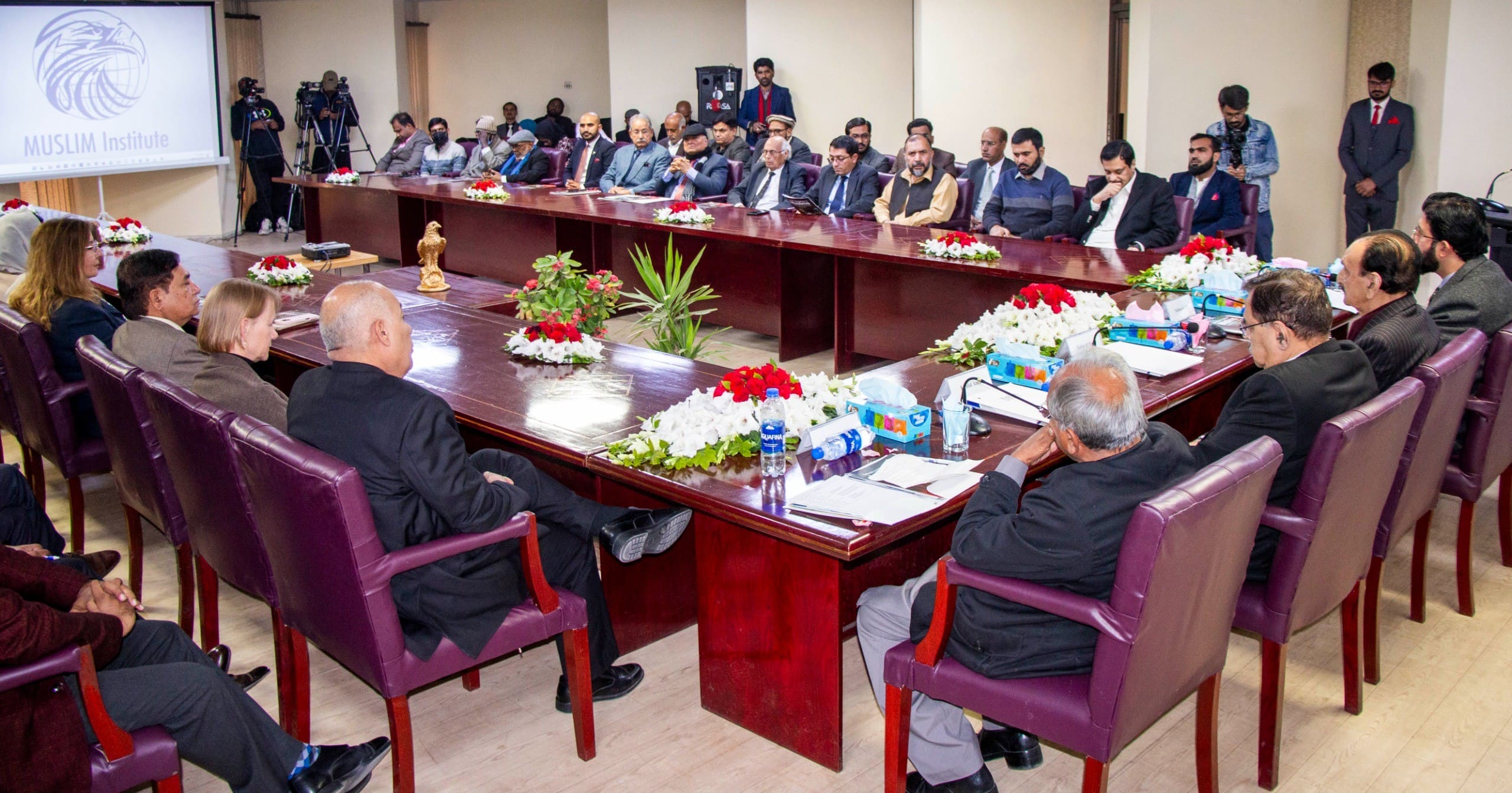
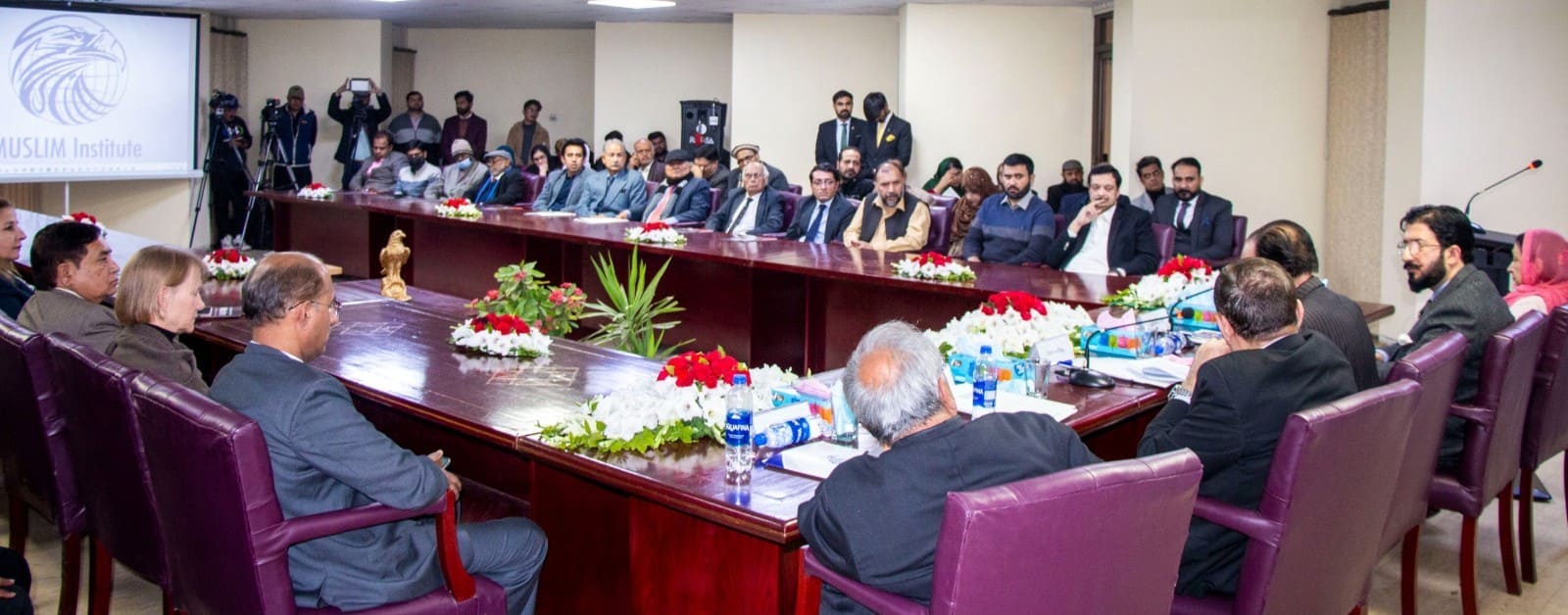
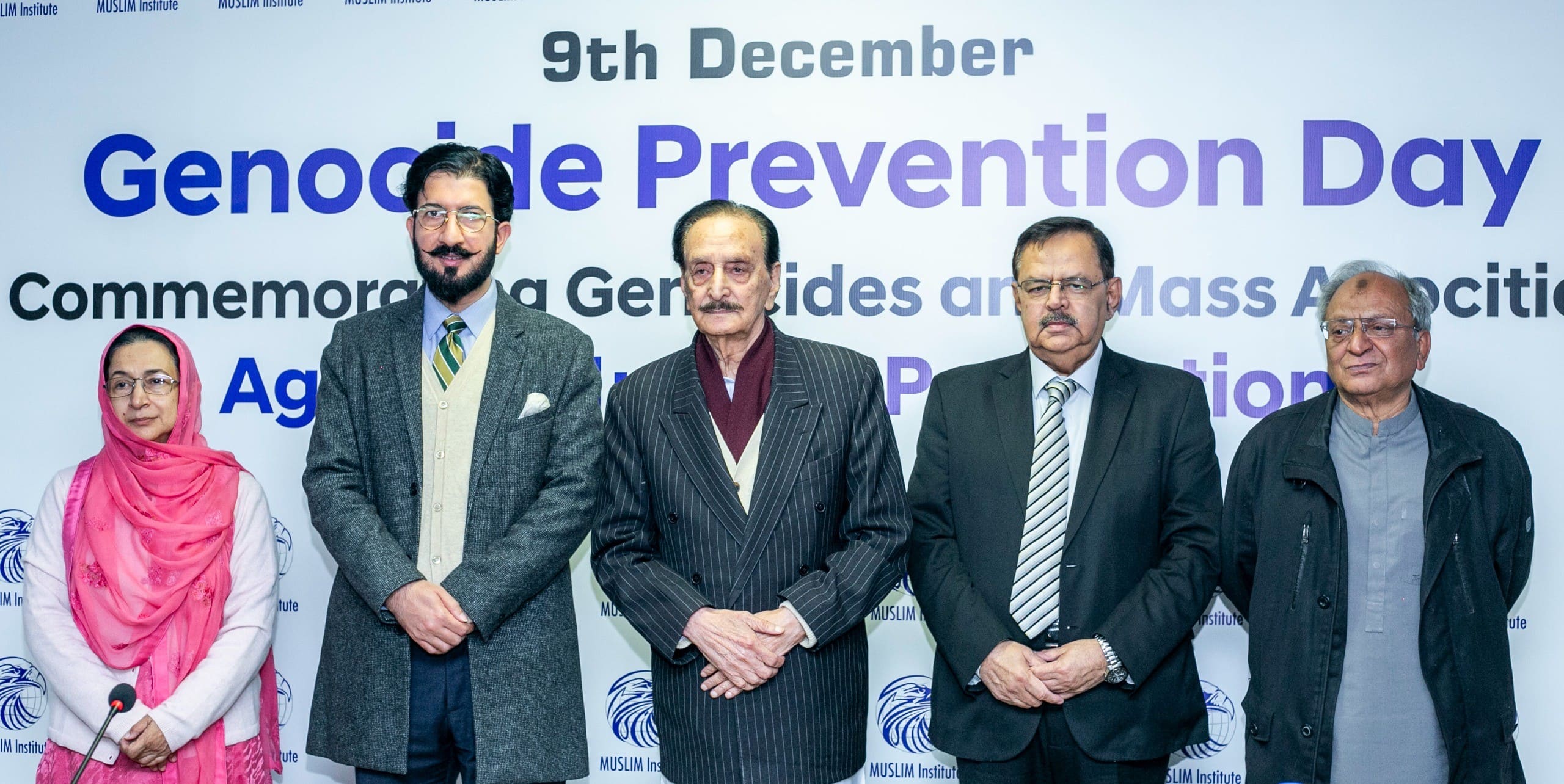
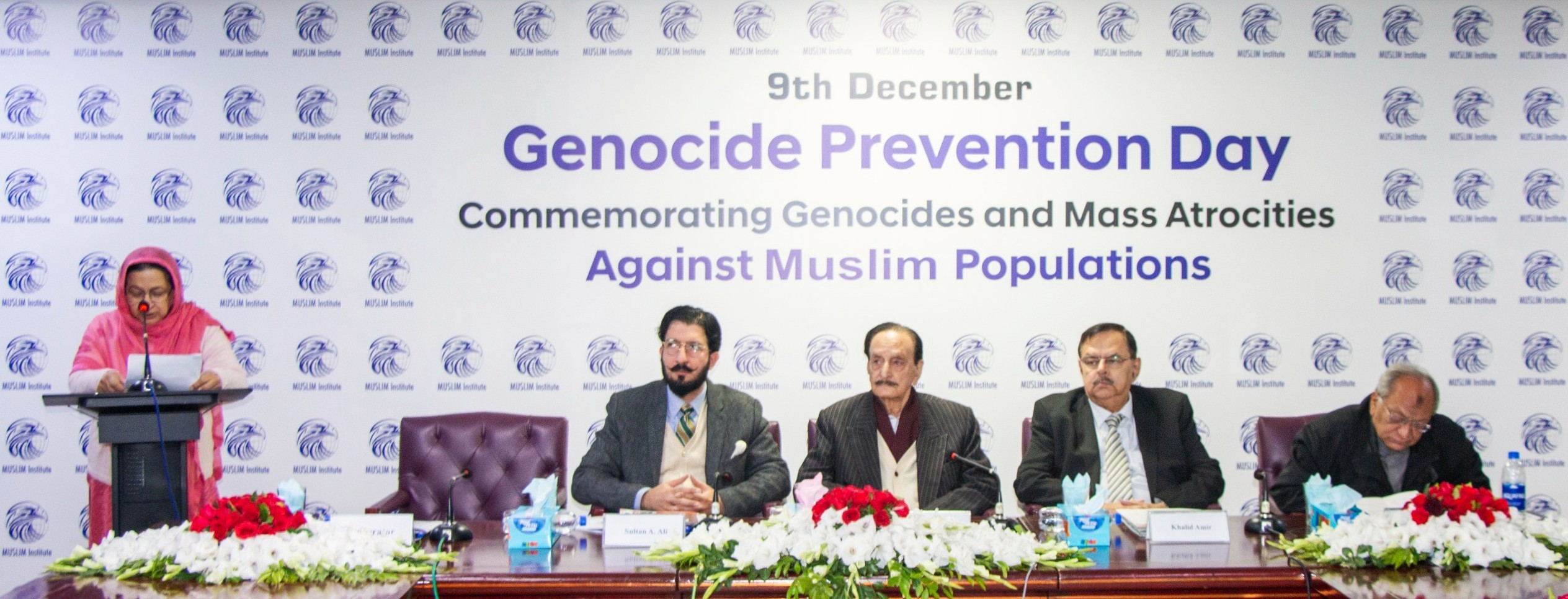
MUSLIM Institute organized a seminar titled “9 December
– Genocide Prevention Day: Commemorating Genocides
and Mass Atrocities against Muslim Populations” at the
National Library of Pakistan, Islamabad. Senator Raja
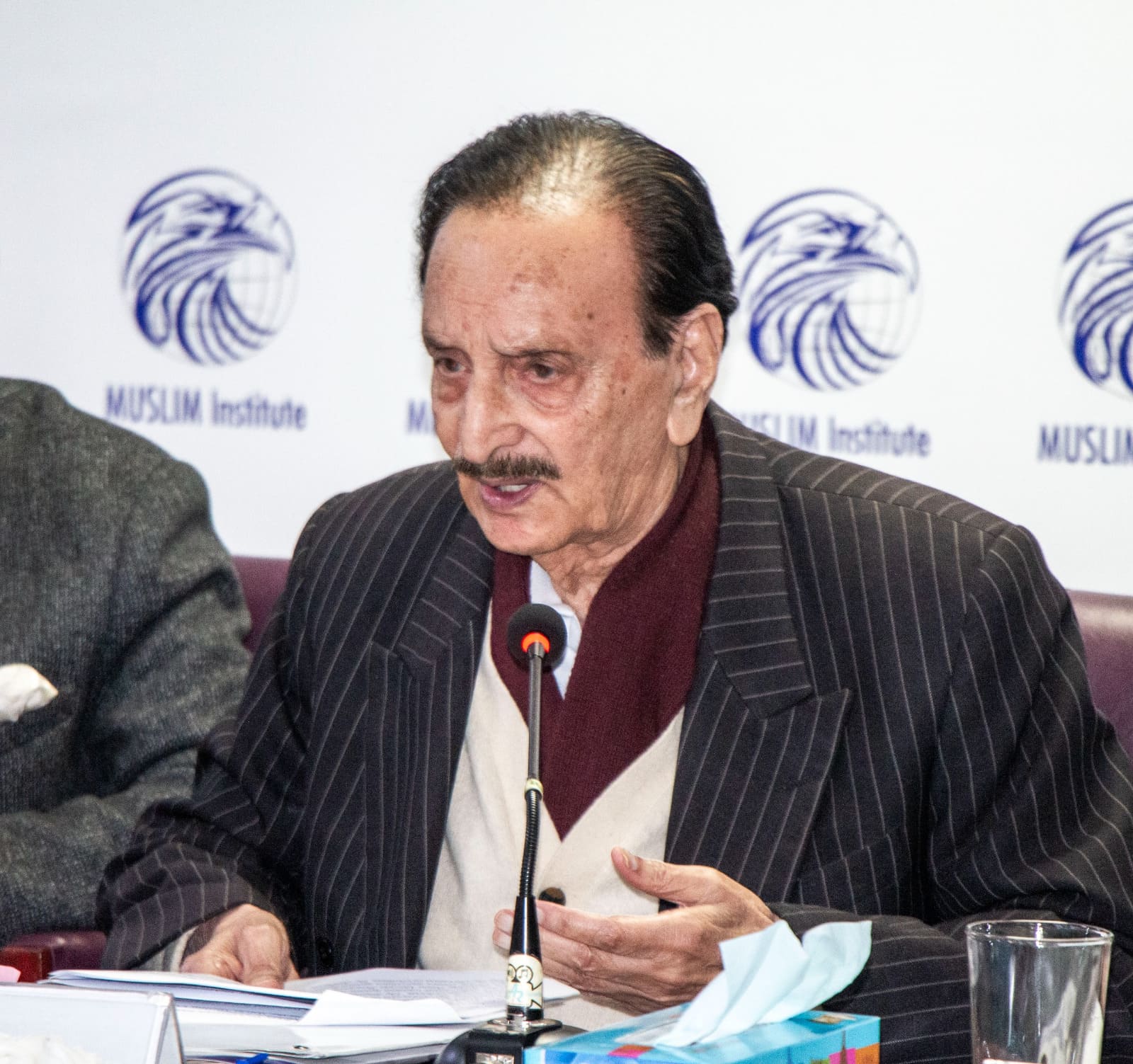
Zafar ul Haq, Secretary General of Motamar Al-Alam AlIslami was the Chair of the Session, and Sahibzada Sultan
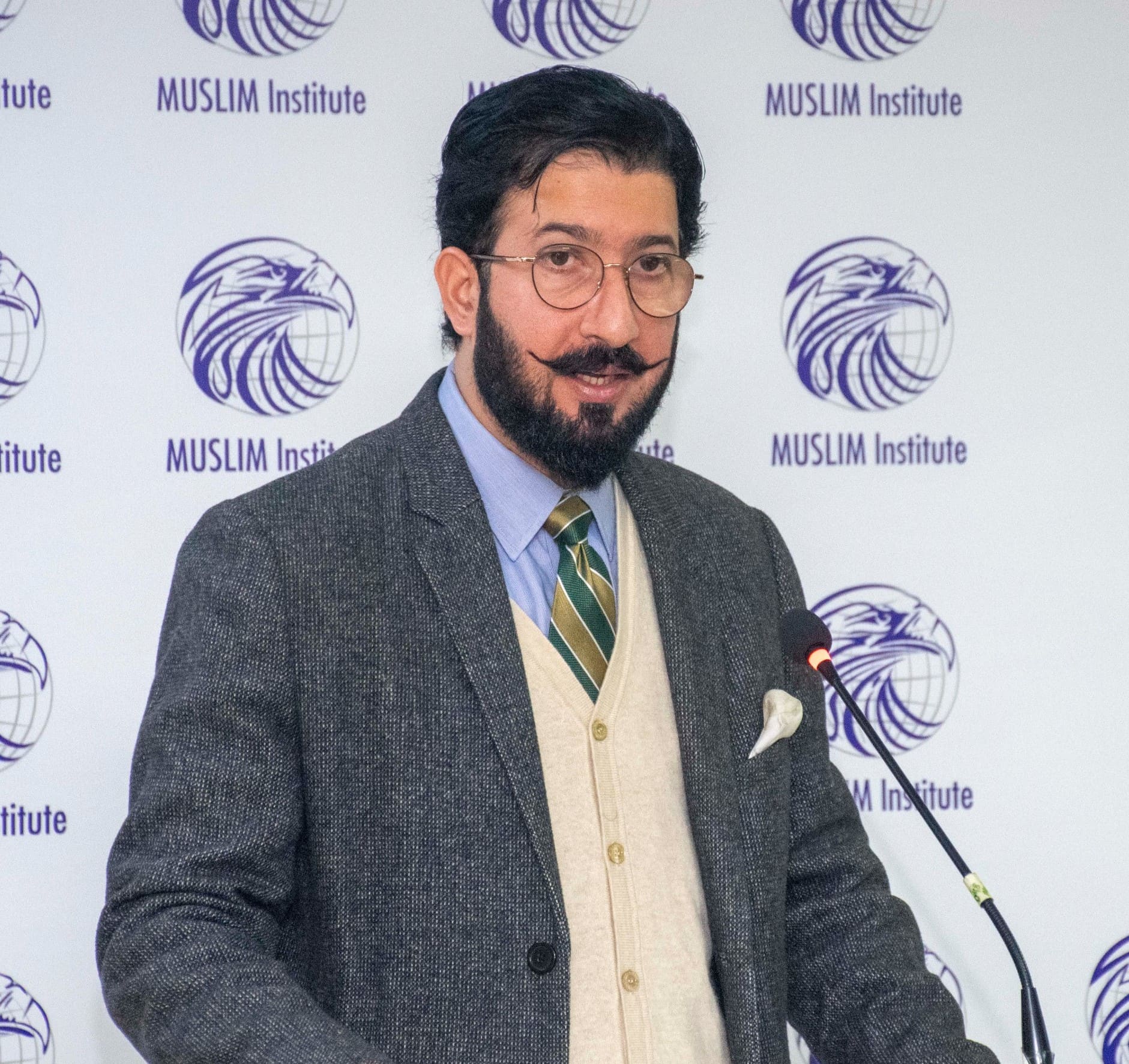
Ahmed Ali, Chairman of MUSLIM Institute, delivered the
opening remarks. The seminar featured insightful
addresses by Major General (R) Khalid Amir Jaffery,
Former Ambassador of Pakistan to Bosnia and
Herzegovina, and Ambassador (R) Afrasiab Mehdi
Hashmi Qureshi, Former Additional Secretary of Pakistan,
as guest speakers. The proceedings were moderated by
Prof. Dr. Aalia Sohail Khan, Former Vice Chancellor of
Rawalpindi Women University. The event was attended
by researchers, students, academicians, representatives
of think tanks, journalists, political leaders, and individuals
from diverse walks of life.
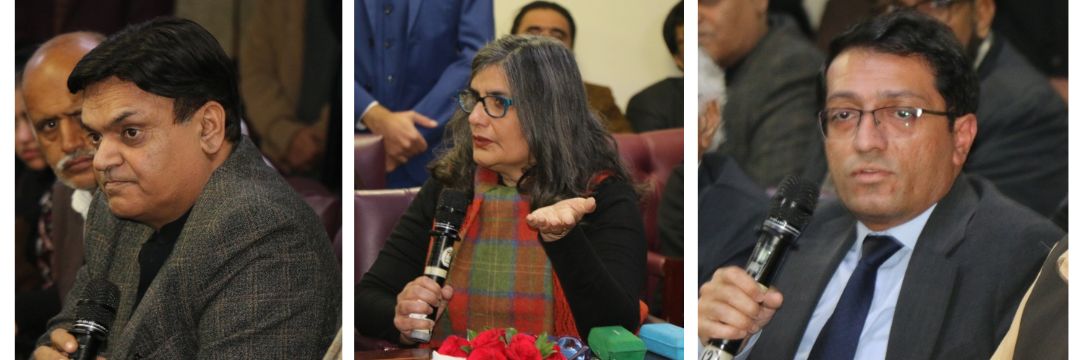
Honourable Speakers and Guests
Following Hounorable Speakers and Guests addressed the seminar.
Senator Raja Zafar ul Haq
Secretary General of Motamar Al-Alam Al-Islami
Sahibzada Sultan Ahmed Ali
Chairman Muslim Institute
Afrasiab Mehdi Hashmi Qureshi
Former Additional Secretary of Pakistan
Major General (R) Khalid Amir Jaffery
Former Ambassador of Pakistan to Bosnia and Herzegovina
Remarks by the Speakers
The Brief summary of the views shared by the speakers:
9th December is observed as the International Day of
Commemoration and Dignity of the Victims of Genocide
and of the Prevention of this Crime. This day serves as a
solemn reminder that genocide is not merely the
massacre of people; it is an assault on the conscience of
humanity and a betrayal of the moral order.
Remembrance is the first step toward justice, and justice
alone restores dignity.
Human life is precious, without discrimination on the
basis of colour, creed, ethnicity, or geography. The killing
of any innocent human being is condemnable and
unacceptable. While numerous events unfold across the
world at any given time, many critical issues fail to
receive sustained attention. As a result, the massacres
and genocides of millions of Muslims have been
relegated to the margins of contemporary history. This
seminar, therefore, was an effort to commemorate such
incidents and restore them to collective memory.
Muslims constitute nearly a quarter of the world’s
population, more than 2 billion people, living across
almost 195 countries, including over 50 Muslim-majority
states. Yet, despite this vast demographic and
geographical presence, Muslim populations remain
among the most vulnerable to mass violence.
Article II of the United Nations Convention on the
Prevention and Punishment of the Crime of Genocide
defines genocide in clear terms. Contemporary history
bears painful witness to organized, systematic, and, in
many cases, state-sponsored massacres of Muslims,
many of which fall squarely within this definition.
Their
cultural identity, historical heritage, and even physical
survival have been deliberately targeted.
This pattern is
not confined to a single region; it spans North Africa,
Eastern Europe, Central Asia, South Asia, and Southeast
Asia. Alarmingly, nearly 13 million Muslims have been
massacred across 26 tragic incidents of genocide and
mass killings, many occurring under direct imperial
administration or with state complicity.
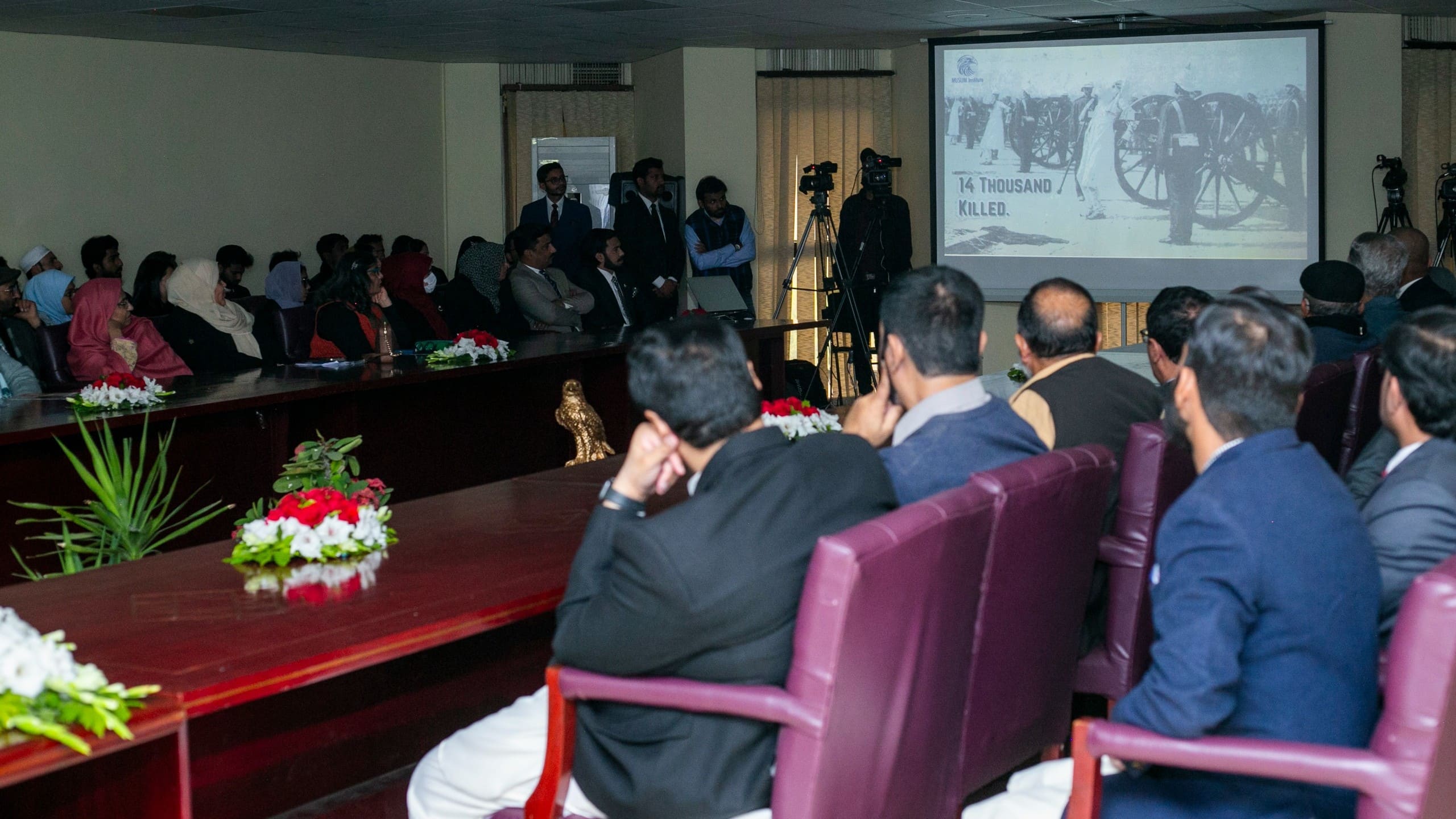
In this context,
MUSLIM Institute has published a short documentary
highlighting the genocides and mass killings of Muslim
populations in Contemporary History (1857 to Date)
which include Circassian Genocide (1850–1879), British
Crackdown on Indian Ulema (1864-1867), British
suppression of the Mahdist state (1898-1899) in Sudan,
Bud Dajo Massacre (1906), Balkan Muslim expulsions and
Massacre (1877-1913), Greco-Turkish War (1919-1922), Rif
War (1921-1926), Kazakh Famine under Soviet Rule (1930-
1933), Italian reconquest of Libya (1911-1935), Bengal
famine under British Colonial rule (1896 and 1943),
Deportation of Crimean Tatars (1944), Setif and Guelma
massacre (1945), Partition of British India (1947),
Indonesian National Revolution (1945-1949), Chechens
and Ingush (1944-1957), Cambodian genocide under the
Khmer Rouge (1975-1979), Khojaly Genocide (1992),
Srebrenica Massacre in Bosnia (July 1995), Bosnian War
and Ethnic cleansing (1992-1995), Chechen Wars and
suppression (1994-2000s), Gujarat anti-Muslim Riots
(2002), Rohingya genocide in Myanmar (2016-2017),
Afghan conflict and foreign invasions (1979-1988 and
2001-2021), Iraq War and aftermath (2003 to date),
Conflict in Indian-Occupied Jammu & Kashmir (1947 to
date), Palestinian casualties (1948 to date).
The wars in Chechnya during the 1990s and early 2000s
resulted in the loss of tens of thousands of civilian lives,
alongside widespread reports of torture, extrajudicial
killings, and mass displacement.
Similarly the Bosnian genocide was neither sudden nor
accidental. It was the culmination of political
manipulation, ethnic nationalism, and a calculated
campaign to eliminate an entire population. Between
1992 and 1995, more than 100,000 people were killed and
millions displaced. At its core was the systematic
persecution of Bosniak Muslims, formally recognized as
genocide by both the ICTY and the ICJ, making it the only
recognized genocide in Europe since the Second World
War.
The most horrific chapter of this tragedy was the
Srebrenica genocide in July 1995. Despite being
designated a UN “safe area,
” Srebrenica fell to Bosnian
Serb forces under Ratko Mladić. More than 8,000 Bosniak
men and boys, were separated and executed. Their
bodies were buried in mass graves and later scattered to
conceal the crime. Each year, newly identified remains
are laid to rest, serving as a stark reminder of the atrocity.
Behind the figures of 100,000 dead and 2 million
displaced lie shattered families and lifelong trauma.
During the Srebrenica massacre, many refugees reached
Tuzla, where the Pakistani Battalion provided food for
three days; a monument today commemorates this
humanitarian gesture.
In Gujarat, India, more than 10,000 Muslims were killed,
raped, and massacred in 2002 by Hindu extremists,
supported by the government of Narendra Modi and his
establishment. Tragically, such mass murders continue in
the present era. Although many of these crimes fall within
the legal definition of genocide, they remain
unrecognized as such.
The UN Special Rapporteur on Minority Issues has
repeatedly warned that Muslim minorities in several
regions face an imminent risk of mass atrocities, noting
that early-warning indicators such as discriminatory
laws, hate-based mobilization, and the securitization of
communities have been ignored for years. Likewise,
Amnesty International, Human Rights Watch, and the
Office of the UN High Commissioner for Human Rights
(OHCHR) have documented systematic repression,
extrajudicial killings, demographic engineering, mass
incarceration, and the deliberate destruction of the
cultural and religious identity of Muslim communities
across various regions.
For instance, Genocide Watch: Alliance Against Genocide
has stated regarding Gaza:
“Israeli leaders’ war crimes, crimes against humanity,
and genocide must be prosecuted by the International
Criminal Court. All states must assist the ICC in
investigating and prosecuting these crimes.”
Today, the people of Palestine face a humanitarian
catastrophe of unprecedented magnitude, marked by
occupation, bombardment, displacement, and the
destruction of homes and entire neighborhoods. The
International Criminal Court has issued arrest warrants
against senior Israeli officials, including Prime Minister
Benjamin Netanyahu, on charges of war crimes and
crimes against humanity. The ICC has upheld these
warrants and indicated that, should arrests not be
possible, in absentia proceedings may be initiated to
ensure that justice is not obstructed.
Similarly, Genocide Watch has noted:
“Approximately 630,000 Rohingya still live in Myanmar
under a system of state-sponsored discrimination and
ethnic segregation.”
The UN Independent International Fact-Finding Mission
on Myanmar concluded that the Rohingya face
conditions of “ongoing genocide,
” and that the 2017
operations demonstrated “genocidal intent.
”
The persecution of Rohingya Muslims thus stands as an
ongoing indictment before the international community.
Entire villages have been destroyed, families persecuted,
and more than one million people forced into exile.
This pattern of persecution extends even to India today,
where threats against Muslims are escalating rapidly.
Numerous human rights organizations and genocide
early-warning bodies have already raised serious
concerns. Eyewitness-verified reports by Human Rights
Watch and Amnesty International document unlawful
demolitions of Muslim homes and properties,
extrajudicial killings, threats of statelessness through
citizenship-verification schemes, mob violence linked to
so-called “cow-protection” vigilantism, and a sharp rise
in public hate speech particularly during election periods.
In 2024 alone, 1,165 such incidents were recorded.
The stark reality is that, despite these alarming and welldocumented patterns, the genocide of Muslim
populations has neither been addressed collectively by
the Muslim world nor presented at international forums in
a unified, research-driven, and institutionalized manner.
By contrast, when Islamophobia was raised collectively
at the United Nations, it resulted in the recognition of an
international day and a global policy discourse. The
genocide of Muslims deserves at least the same level of
seriousness, coordination, and resolve.
Interactive Session
The Summary of the Interactive Session
Allama Muhammad Iqbal wrote a poem titled “Alam-eBarzakh” in Armaghan-e-Hijaz. In this poem, a hundredyear-old dead man asks the earth:
“What is Qiyamat (the Day of Judgment)?”
The earth replies:
“Qiyamat means rising again.”
The dead man responds that if Qiyamat means rising
again, then he does not wish to rise again. The earth is
unable to comprehend this and wonders whether there
could truly be someone in the world who does not wish to
return to life. At that moment, a voice from the unseen
proclaims:
Neither destined for snakes and scorpions, nor for traps
and beasts,
Eternal death is meant only for subjugated nations.
The call of Israfil cannot bring them back to life,
For even in life their bodies were devoid of spirit.
To die and rise again is the task of free men,
Though the destination of every living being is the
embrace of the grave (Iqbal).
In essence, eternal death is the destiny of weak and
subjugated nations, whereas rising again is the work of
free people.
According to commentators of Iqbal,
“Bang-e-Israfil”
symbolizes those great events and trials that confront
nations in order to awaken them. The horrific events that
occurred in Bosnia, such as the targeted killing of
Muslims, are not distant memories; they belong to recent
history. What happened in Bosnia, Kashmir, among the
Rohingya, and in Palestine, any one of these tragedies
should have been sufficient to awaken an entire Muslim
nation.
Yet, despite these repeated warnings, people continue to
live fragmented lives, consumed by narrow personal
interests and divisions.
The real need, therefore, is collective awareness, an
honest and introspective question of whether there is a
genuine will to stop these atrocities or not. According to
its foundational values, the Muslim Ummah cannot exist
in isolation from one another; nevertheless, it continues
to attempt to do so, to its own detriment



_Afrasiab_Mehdi_Hashmi_Quresh.jpeg)
_Khalid_Amir_Jaffery.jpeg)