|
|
|
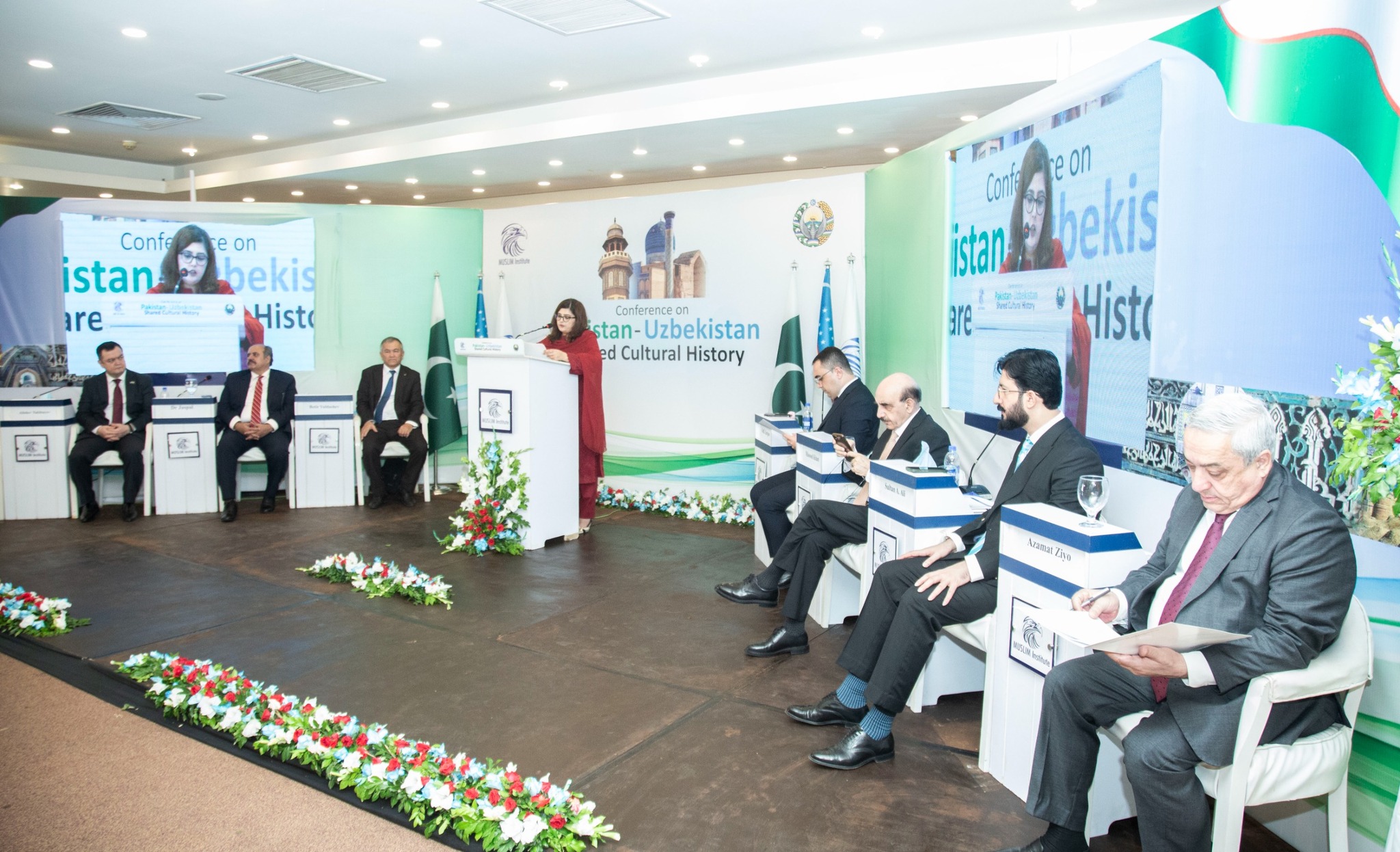
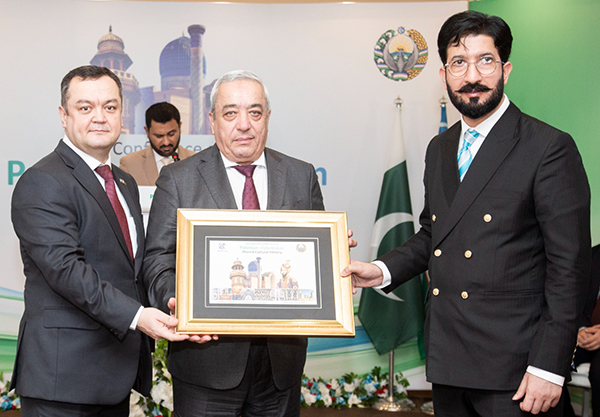
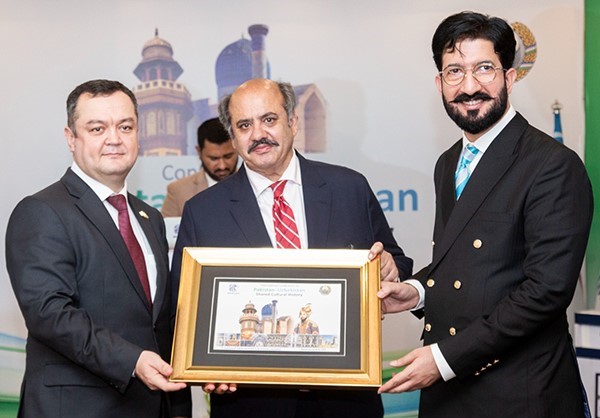
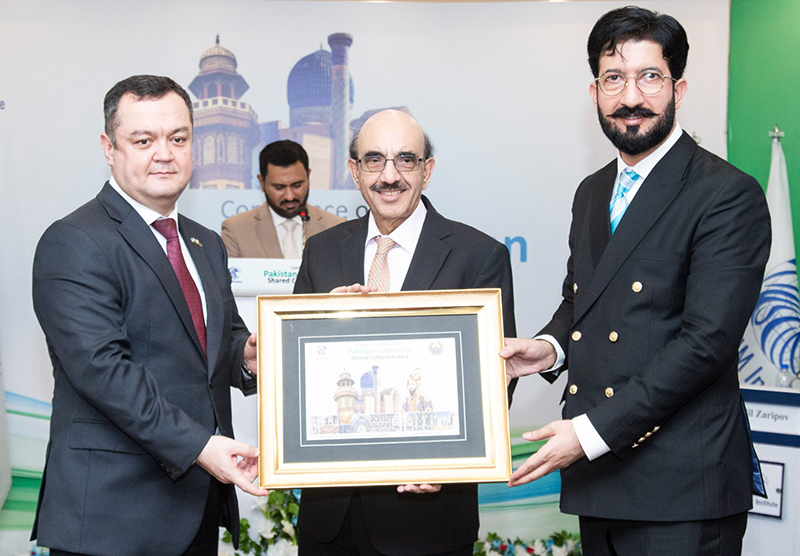
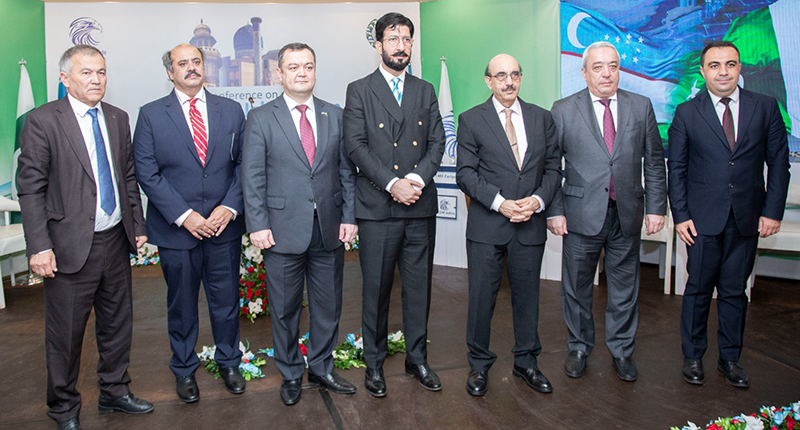
The session was chaired by Sardar Masood Khan, former President of Azad Jammu & Kashmir, while H.E. Alisher Tukhtayev,
Ambassador of Uzbekistan to Pakistan, delivered the closing remarks. The proceedings concluded with a vote of thanks
by Sahibzada Sultan Ahmed Ali, Chairman MUSLIM Institute. Distinguished speakers included a delegation from Uzbekistan’s Academy
of Sciences comprising Prof. Azamat Ziyo, Director, Institute of History; Dr. Botir Yuldashev, Research Fellow, Institute of History and Dr
. Odil Zaripov, Scientific Secretary, Institute of History. Other distinguished speakers were Dr. Uzma Siraj, Director, PVE, NACTA Islamabad
and Dr. Zafar Nawaz Jaspal, Dean, Faculty of Social Sciences, Quaid-i-Azam University, Islamabad. The second session was moderated by Dr. Shujahat Haider Hashmi.
Brief Summary of the remarks shared by speakers are observed as under:
|
|
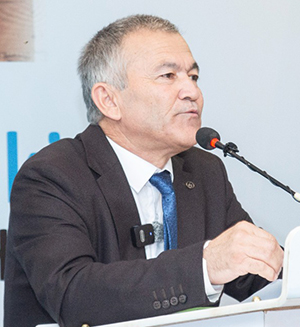
Guest
Dr. Botir Yuldashev
Researcher - Institute of History
|
|
Zaheer Uddin Muhammad Babur not only established an empire in Indo-Pak subcontinent but also introduced the rich Central Asian traditions. For example, laying gardens, or Charbaghs were inspired by those of Samarkand, where Amir Timur had built twelve gardens facing each other. Upon arriving in subcontinent, present-day Pakistan, Babur first reached Bhira, where he constructed Bagh-e-Safa. In 1524, he entered Lahore and later advanced towards Delhi. His memoir, Babur Nama, translated into Urdu by Rashid Akhtar Nadvi, vividly describes the landscapes of Uzbekistan, Pakistan, Afghanistan, and India. Babur’s primary ambition was to revive the Timurid empire, a vision he ultimately realized.
Successive Mughal rulers continued this legacy by constructing gardens, madrasas, and mausoleums. Among these, Wah Garden is notable for its Charbagh design, ceramic water channels, and architectural features, closely resembling Timurid monuments in Samarkand and Shahrisabz.
In Lahore, monumental works such as Badshahi Mosque, Alamgiri Gate, and Shah Jahan’s Takht-e-Masjid stand as enduring emblems of Mughal grandeur. These sites, along with gardens like Wah, underscore the deep interconnection of religious, cultural, and architectural traditions across the region. Today, Uzbekistan, once the heart of the Timurid empire, continues to thrive as a vibrant cultural destination, attracting millions of visitors annually. This shared heritage, between Pakistan and Uzbekistan, forms a strong foundation for enhanced cultural and historical ties between the two regions.
|
|
|
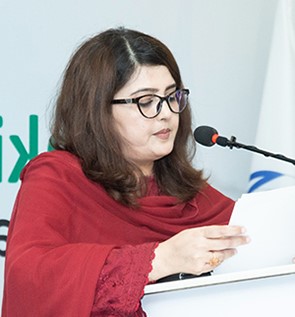
Guest
Dr. Uzma Siraj
Director - PVE, NACTA Islamabad
|
|
In the 21st century, Pakistan and Uzbekistan are rediscovering one another, not as strangers, but as inheritors of shared history. Today governments are working to expand economic cooperation through trade corridors, energy projects, and transport connectivity. The Trans-Afghan Railway and other initiatives promise to turn geography into opportunity.
Yet economics alone cannot build enduring partnerships. Civilizational and spiritual linkages must reinforce economic ties. Sufi and religious tourism offer a powerful avenue. Imagine structured routes of religious tourism where Pakistani devotees visit Bukhara, Samarkand, and Termez, while Uzbek pilgrims travel to Lahore, Multan, and Sehwan. Such initiatives would strengthen people-to-people contact and generate sustainable economic activity for both states.
Similarly, academic exchange, joint cultural festivals, and collaborative research on Turko-Islamic heritage can deepen intellectual bonds. Reviving shared memories which can inspire younger generations to see themselves as partners in a common civilizational journey.
Cultural diplomacy also holds great potential. Cultural centers and museums in both countries could host exhibitions and programs highlighting the shared artistic and literary heritage of the two nations.
|
|
|
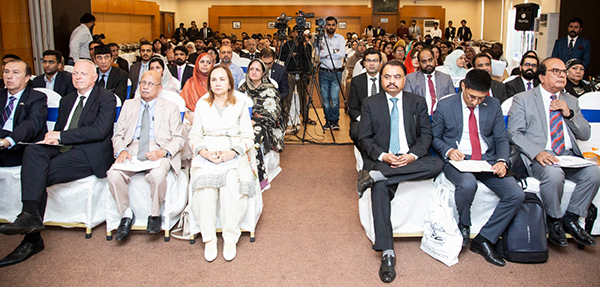
Audience during the session of conference.
|
|
|
|
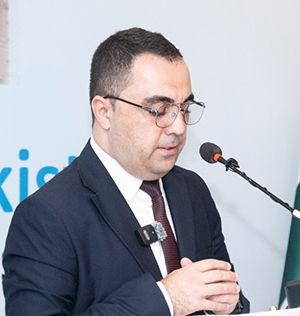
Guest
Dr. Odil Zaripov
Scientific Secretary - Institute of History
|
|
The Ashar Khani network of foreign trade extended across vast regions: northward to the Kazakh steppes and Russia, eastward to the Kalmik and later Jungar Khanates and China, southward to the Baburid subcontinent, and westward to Iran and the Ottoman Empire. Records of Ashar Khani–Baburid embassies and trade are preserved in Abdul Hamid Lahori’s Pashah Nama, a central source for understanding these exchanges. Lahore in the 17th century was the leading hub of Baburid historiography, producing notable historians such as Abdul Hamid Lahori, Muhammad Salih Kanbu, Nizamuddin Ahmad, Inayat Khan, and Khafi Khan.
Diplomatic exchanges, beginning in Akbar’s reign, further stabilized these networks. From 1572, Akbar and Abdullah Khan maintained regular correspondence and embassies for over two decades, focusing on protecting merchants and facilitating caravan traffic. For the Khans, Baburid India served as a vital external market, with caravans reaching as far as Bengal and Sindh.
Trade routes through Kabul and Kandahar offered practical advantages, being less harsh than the Hindu Kush passes and supported by towns with caravanserais and sarafs who extended credit. As maritime trade fell under Portuguese control in the 16th century, Baburid rulers reinforced these overland corridors, ensuring that goods from Bukhara and Samarkand continued to reach Peshawar, Lahore, and Multan.
These historic connections underscore the enduring relevance of bonded transit, dry-port development, modern customs systems, and collaborative scholarship around the shared Baburid–Ashar Khani heritage.
|
|
|
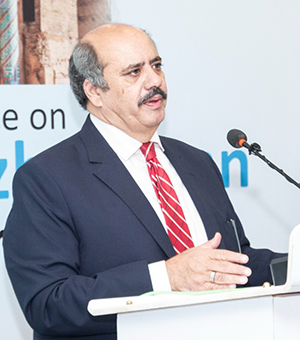
Guest
Dr. Zafar Nawaz Jaspal
Dean - Faculty of Social Sciences, Quaid-i-Azam University, Islamabad
|
|
History guides us to the present and anticipates the future. Among the cultural assets shaping Pakistan’s trajectory, Sufism stands out as a vital resource. At a time when states confront the challenges of radicalization and extremism, Sufi culture and teachings offer pathways of moderation and resilience.
Religious tourism can revitalize shared heritage: Uzbekistan’s cities of Samarkand, Bukhara, and Tashkent, alongside Pakistan’s Multan, Sehwan, and Lahore, hold vast potential for structured religious tourism and cultural exchange. Since the release of its National Security Policy in 2022, Islamabad has redefined its outlook from geo-strategic to geo-economics.
The Trans-Afghan connectivity route linking Uzbekistan to Pakistan carries the promise of reviving Silk Road linkages and contributing to a resurgent Asia. Alongside economic and cultural cooperation, security collaboration also binds the two states. Within the Shanghai Cooperation Organization, the Regional Anti-Terrorist Structure (RATS), headquartered in Tashkent, provide a framework where Islamabad and Tashkent already work closely.
For Pakistan, a frontline victim of terrorism, this cooperation adds a critical layer of trust and convergence in counterterrorism measures. Together, these cultural, economic, and security linkages form the basis of a deeper partnership between Pakistan and Uzbekistan, rooted in history yet oriented toward shared futures.
|
|
|
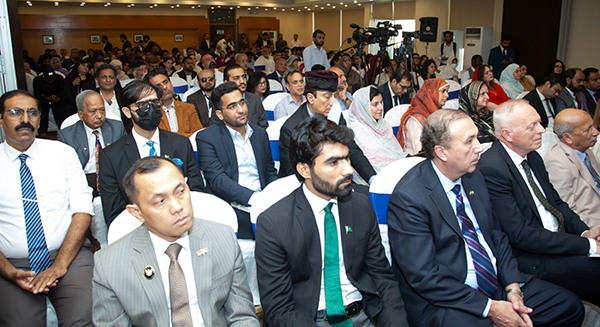
Audience view of conference.
|
|
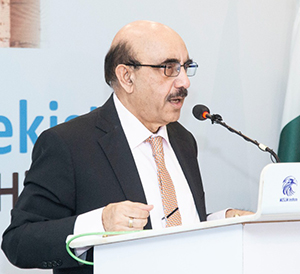
Chairing Remarks
Sardar Masood Khan
Former President of Azad Jammu & Kashmir
|
|
Uzbekistan is renowned for its cleanliness, architecture, cuisine, and the work of its Academy of Sciences, which integrates natural sciences with cultural and linguistic research to foster international understanding. Institutions such as the MUSLIM Institute, have further advanced dialogue and cooperation between Pakistan and Uzbekistan.
The two nations share centuries-old historical and cultural linkages, once bound by Persian as a common lingua franca and enriched by scholars like Al-Biruni, Al-Farabi, and Ibn Sina, whose contributions shaped global knowledge. Despite colonial disruptions, Islam and cultural exchange have sustained these ties.
Today, both countries are members of the Shanghai Cooperation Organization and the Economic Cooperation Organization and hold significant potential to expand connectivity, trade, and security collaboration. Strengthening travel routes and people-to-people exchanges can further cement relations.
Sufism, with its message of harmony and reflection, provides a shared spiritual foundation at a time when Muslims face growing Islamophobia and marginalization. By embracing their identity with confidence and standing united on just causes such as Palestine and Kashmir, Pakistan and Uzbekistan, alongside the wider Muslim world, can build stronger cooperation and play a more purposeful role in shaping the global order.
|
|
|
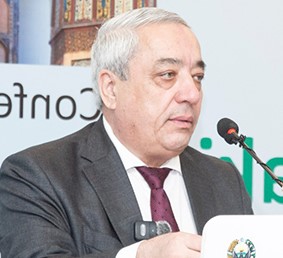
Guest
Prof. Azamat Ziyo
Director - Institute of History
|
|
The history of Uzbekistan and Pakistan reaches back to the earliest phases of human civilization. Since the Stone Age, ancient communities inhabited these regions, with the Kuget culture and northern Bukhistan noted for early farming and contacts with Turan, the ancient name for Central Asia. In the third and second millennia BCE, the Indus or Harappan civilization in present-day Pakistan established land and maritime links with diverse peoples.
From the 8th century onward, Islam spread across South Asia, with Sufi sheikhs playing a pivotal role. By the late 10th century, much of present-day Pakistan was under Muslim rule, marking a flourishing of Islamic culture and architecture.
The Mughal period elevated Lahore as an imperial capital, where rulers like Babur, Humayun, Akbar, and Shah Jahan fostered a golden era of art and architecture, leaving enduring monuments such as the Wazir Khan Mosque and Moti Masjid.
This shared history illustrates centuries of cultural exchange, spiritual kinship, and civilizational continuity between Uzbekistan and Pakistan, underscoring the deep-rooted bonds that continue to link the two nations across time.
|
|
|
|
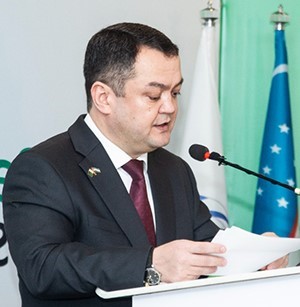
Closing remarks
H.E. Alisher Tukhtayev
Ambassador - Uzbekistan to Pakistan
|
|
The conference brought together eminent ambassadors, diplomats, and scholars, reflecting the international community’s genuine commitment to fostering cultural understanding, academic dialogue, and people-to-people connectivity.
Such engagements not only deepen scholarly cooperation but also strengthen bonds of friendship and mutual trust between Pakistan and Uzbekistan.

The exchange of ideas and proposals during the sessions laid the foundation for future collaboration in youth initiatives, academic research,
arts and tourism, while also preserving the shared cultural heritage of both nations. Conferences of this nature play a vital role in advancing academic engagement and opening new avenues for joint initiatives.
|
|
|
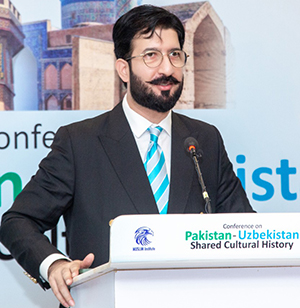
Vote of thanks
H.E Sahibzada Sultan Ahmed Ali
Chairman - MULSIM Institute
|
|
Material well-being and economic prosperity is important, but equally essential is the study of our own history. Without history, there is no culture; without culture, no identity; and without identity, nationhood cannot exist. From 1936 to 1945, Quaid-e-Azam repeatedly linked constitutional issues with history, as seen in his historic address of 23 March 1940 in Lahore, where he cited figures like Lala Lajpat Rai to emphasize that statehood rests on history, culture, and national heroes.
Today, works are available in the Urdu language that deserve careful study, particularly for students of history. These include Shahjahan Nama; Khafi Khan’s two-volume history of the Timurid dynasty; Babur Nama, Jahangir Nama, Humayun Nama, Akbar Nama, and Darbar-e-Akbari by Shams-ul-Ulama Muhammad Hussain Azad etc. Equally important are three poems that must be read in sequence: Moulvi Ismail Merathi’s Ibbet Nama-e-Akbarabad, Maulana Hali’s Musaddas-e-Hali, and Allama Iqbal’s Shikwa and Jawab-e-Shikwa. Together, they provide deep insights into our history, heritage and decline.
The shared historical heritage with Central Asia is now threatened by Hindutva in India. The distorted portrayals of Ahmad Shah Abdali, Babur, Aurangzeb, and Shahab-ud-din Ghori reflect this agenda. Writers, poets, and media professionals must safeguard this legacy and present our icons with accuracy and dignity.
|
|
|
|
|
|
Sufi poetry has been composed in Punjabi, Sindhi, Pashto, Brahavi, and various regional languages of India, all of which bear a strong imprint of Central Asian literary traditions. The works of Jalaluddin Rumi, Farid Uddin Attar, and Sanai Ghaznawi, among many others, deeply influenced this tradition and shaped the spiritual imagination of South Asia.
Equally significant is the tradition of Quranic exegesis known as Tafsir-e-Arifana or Tafsir-e-Sufiana, pioneered by Najmuddin Kubra of the Naqshbandi order, which left a lasting contribution to Islamic intellectual thought. It is within this framework that local Sufi poetry continues to resonate, yet the need remains for systematic translation and preservation of these works to ensure their accessibility for wider audiences.
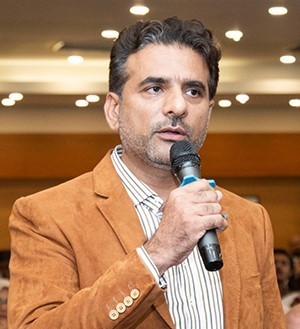

For the proper documentation of this shared heritage, academic institutions must play a central role. While the Central Asia Center at the University of Peshawar has contributed to this effort, similar contributions are required from other leading academic institutions. A coordinated initiative involving Central Asian representatives, the Embassy of Uzbekistan, and Pakistani academic institutions would provide the necessary framework to document, preserve, and promote this common cultural and intellectual legacy in a more comprehensive and organized manner.
|
|
|
|
|
|
| |
|