|
|
|
|
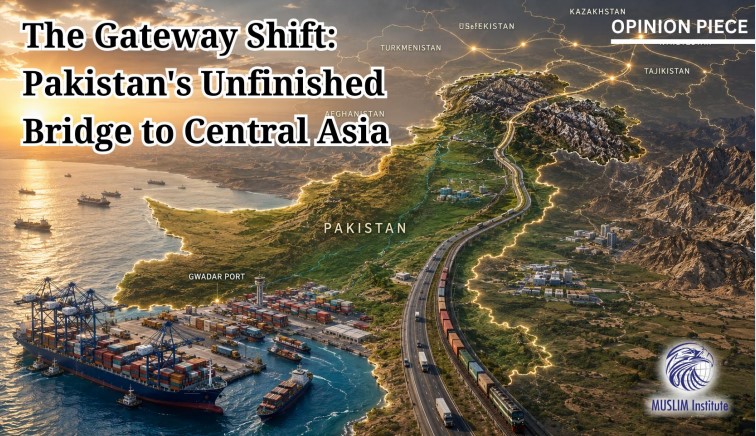
Central Asia has been searching for the sea, almost all its modern history. Trade in the area has always been heavily channelled through two rather than one. Meanwhile, though, Russia, which is a far more important partner in regional trade than either of these two countries, even though it sits more centrally to Central Asia's markets than they do, is a diminishing presence, with its trade with China falling from 58 percent of regional trade in 1995 to about 19 percent today.
Pakistan, saddled with a far less central role in Central Asia's markets, registers barely at all in that picture.
Its bilateral trade with the region stood at just over 2.4 billion dollars in fiscal year 2025, a fraction of what China alone moves through the region in a single year.
This gap is the real subject of this piece, not because Pakistan lacks the geography to close it, but because it has spent the better part of a decade unable to use the geography it has.
Central Asia has had to rethink its options in the wake of two disruptions in recent years. In the Somali crisis of 2022, and following the Russian invasion of Ukraine, a fifth of the world's oil and gas flows through the Strait of Hormuz, while in the case of war insurance on ships transiting the Gulf, it rose from about 0.12 percent of a ship's value to as high as 3 percent to 8 percent in just weeks for a single mid-sized tanker.
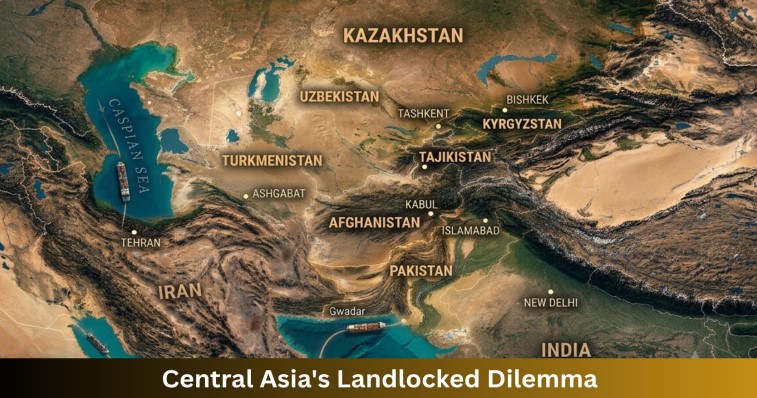
These crises were sufficient to push Central Asia to look south. What is not talked about is that the path it was most appropriate for traffic was never Iran, and never high passes of China. It passes through Afghanistan, it was, it is.
|
|
On paper, the case of Pakistan is very simple. At a reasonable distance, the shortest and cheapest route onward from here to Central Asia is through Afghanistan itself, and for decades, traders from both Pakistan and Afghanistan have been using the corridor under the Afghanistan-Pakistan Transit Trade Agreement (APTTA).
It's a corridor that was closed in October 2025. This is Pakistan's position in Central Asia, and nothing else matters: the relationship has no reset switch, one analyst said in a blunt assessment. The shortest bridge to the area is the closed one.
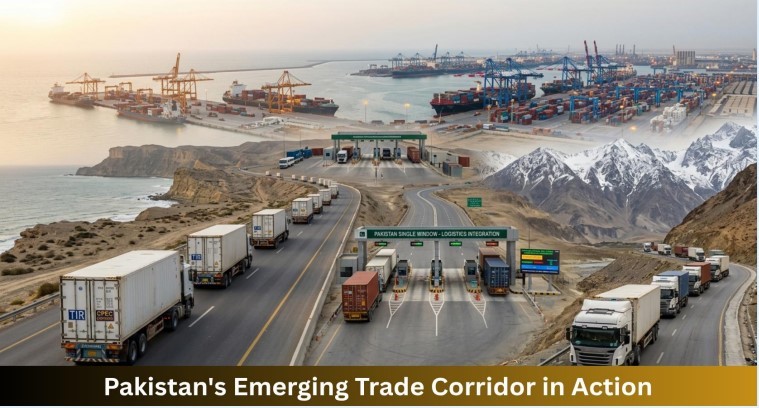
What Pakistan has created are workarounds, and they should be considered workarounds and not as evidence of a natural advantage finally realised.
The Iran corridor, which opened via the Gabd Rimdan border crossing in April 2026, was not created because Tehran chose to favour Central Asian ports for its own.
The refrigerated trucks that arrived in Tashkent in April and the export shipment that arrived in Kyrgyzstan in April are real and verifiable but best understood as Pakistan's taking up an excess from Iran's problem, rather than a decision on Pakistan's part to avoid Iran in normal times.
The China corridor is similar in that it offers opportunities, but also constraints. The journey of a single Kyrgyz truck from Bishkek to Sost Dry Port in April 2026 was a true feat and a valuable proof of concept, covering approximately 3,300 kilometres along the Karakoram Highway and passing through the Khunjerab Pass, which at 4,600 metres usually remains closed all year round.
So far, it is not a working trade route. One truck, though symbolic, is not enough;
the altitude, the weather, the distance, all the above make this route unlikely to be the main artery of trade in Central Asia.
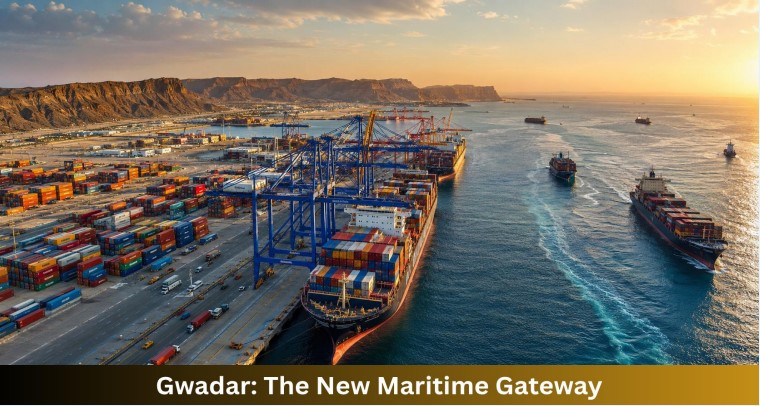
The tariff cuts announced in May 2026 are the most significant policy measure taken by Pakistan thus far in Gwadar.The reductions are part of Pakistan's Ministry of Maritime Affairs' serious attempt to get five days of free storage,
a reduction of 25 percent, in berthing fees, 40 percent cut in transshipment charges, and 31 percent cut in transit cargo charges, in order to be competitive for cargo that would otherwise go on through the Gulf or Iran.
|
|
They are not to be taken lightly. At the same time, however,
they are also, to some degree, a reaction to an emergency rather than the result of a longer strategy that predated the Hormuz crisis,
and that is yet to be proved in the event of its termination.
None of this takes away from the accomplishments of the ports of Pakistan in such a short span of time. It does imply that the country, at least for a while, has changed a part of Central Asian trade away from Pakistan, either due to war in Afghanistan or due to war with Iran. If that rerouting is permanent will depend much less on the tariff schedules than on a question over which Pakistan has little control: whether Afghanistan stabilises, and whether its territory ceases to be used as a base for attacks on Pakistan.
The promises of Pakistan's ports have been repeated for decades without results, but have gone unfulfilled, leaving their word to quietly become an alibi.
Since 2002 Gwadar has been referred to as a future hub.
What the spring of 2026 has brought to light is not that now is the time, but how much of it remains dependent on circumstances over which Pakistan does not have a full hand.
What reached Tashkent are genuine refrigerated trucks, what arrived at Sost are genuine cargo and what announced on the tariff cuts at Gwadar is not a dream. They came from two wars that shut other doors, however, and not from a solid strategic position. The reason is Hormuz diverted cargo to Gwadar is not because Pakistan was able to charge less or provided more reliable services, it was because Iran's ports were a liability due to the Hormuz crisis. It was a genuine achievement, but a single pilot shipment,
more than four and a half kilometres up a mountain pass, which was the China corridor's first Kyrgyz truck.
|
|
|
It wasn't Iran or China that was the path along which this transformation could have occurred but was not until the war was over. Its Afghanistan alone was the shortest and the cheapest route between the lanes of the Pakistani port and the markets of Central Asia, which was closed since October 2025 due to the militant attacks from the Afghan soil and the subsequent conflict.
Total trade of Pakistan with Central Asian countries stands at Rs 2 billion which is far less than the trade volume of China with the region which is over 100 billion dollars annually. It will not narrow as Iran goes astray or the passes of the Himalayas. It will close if it ever closes, on the day Kabul no longer permits its soil to be used as a launch pad for attacks against Pakistan and reliable regular trade is allowed to resume at the Torkham and Chaman borders.
This is the argument which this piece has sought to make clearly. Pakistan's geopography has laid a valid foundation for its claim to be the gateway of Central Asia towards the sea, but unless its
western border is not turned from a battlefield to a corridor, this claim will remain theoretical.
Stability in Afghanistan will not only benefit Pakistan's economic interests, it will bring stability to the region from Kabul to Tashkent and Dushanbe, each of which has been frustrated by a shortest path that has proved the longest.
Until this stability comes and until Afghan soil becomes not a launch pad for violence against Pakistan, the sea routes through Iran and China will remain the valuable, hard-won, necessary substitutes they are today.
|
|
Author: Waqas Habib, MPhil Scholar, Quaid-i-Azam University, Islamabad.
|

P.O Box: 562, Islamabad, Pakistan | P.O Box: 780, Rickmansworth WD3 0NH, UK
info@muslim-institute.org | www.muslim-institute.org | unsubscribe
|
|


