|
|
|
|
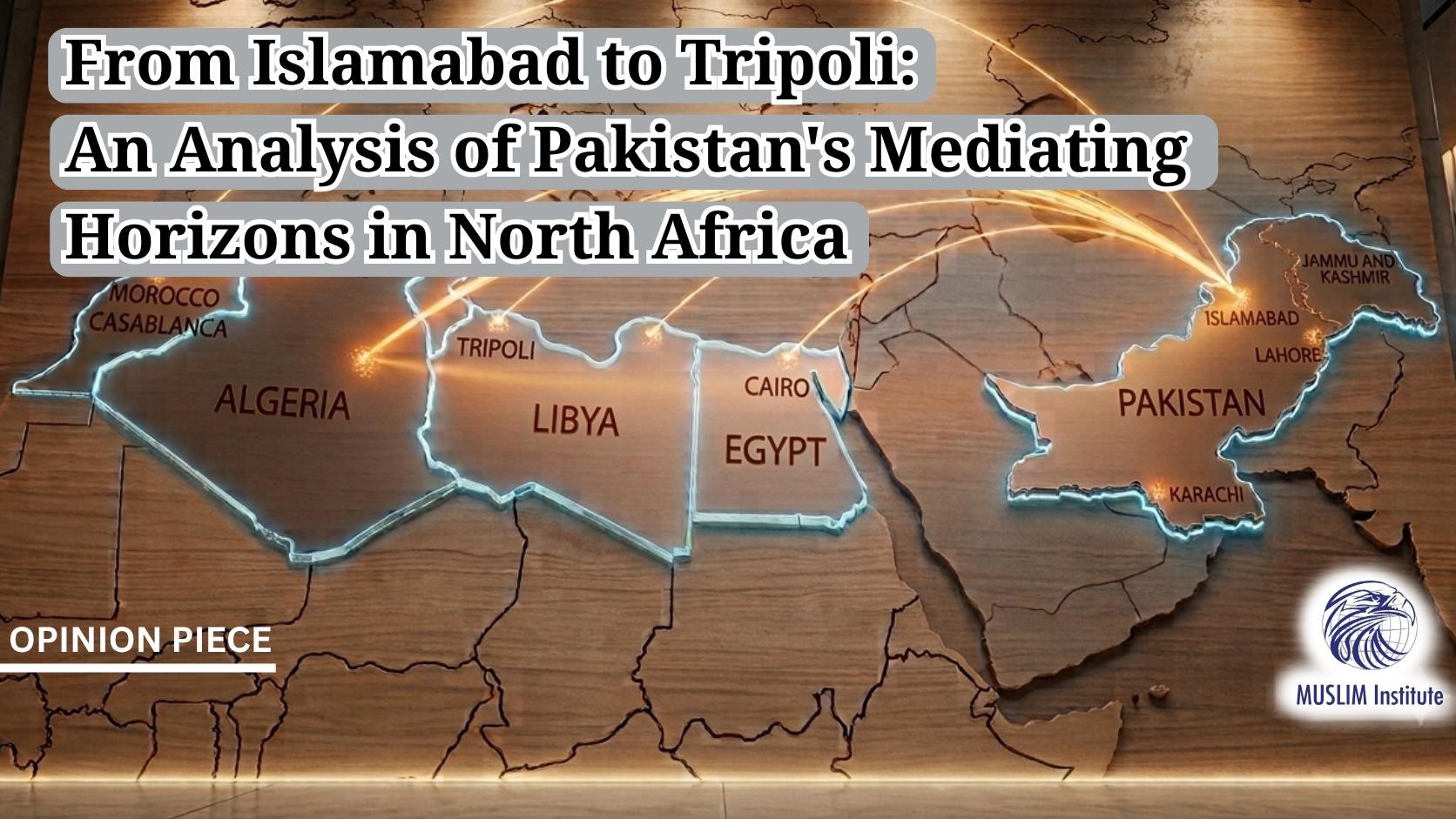
Pakistan enjoys strong brotherly ties with the North African Countries. Based on a strong Islamic cultural heritage, the countries are naturally inclined towards each other, resulting in sustainable diplomatic engagements.
Pakistan's efforts for mediation in the Libyan issue at present are a continuation of the policy vision given by Quaid-e-Azam Muhammad Ali Jinnah. He expressed his determination in 1947 that Pakistan would establish brotherly relations with the Muslim world.
Till the date, Pakistan's foreign policy is primarily guided by the principle of cooperation, harmony, and the peaceful resolution of disputes among Muslim countries.
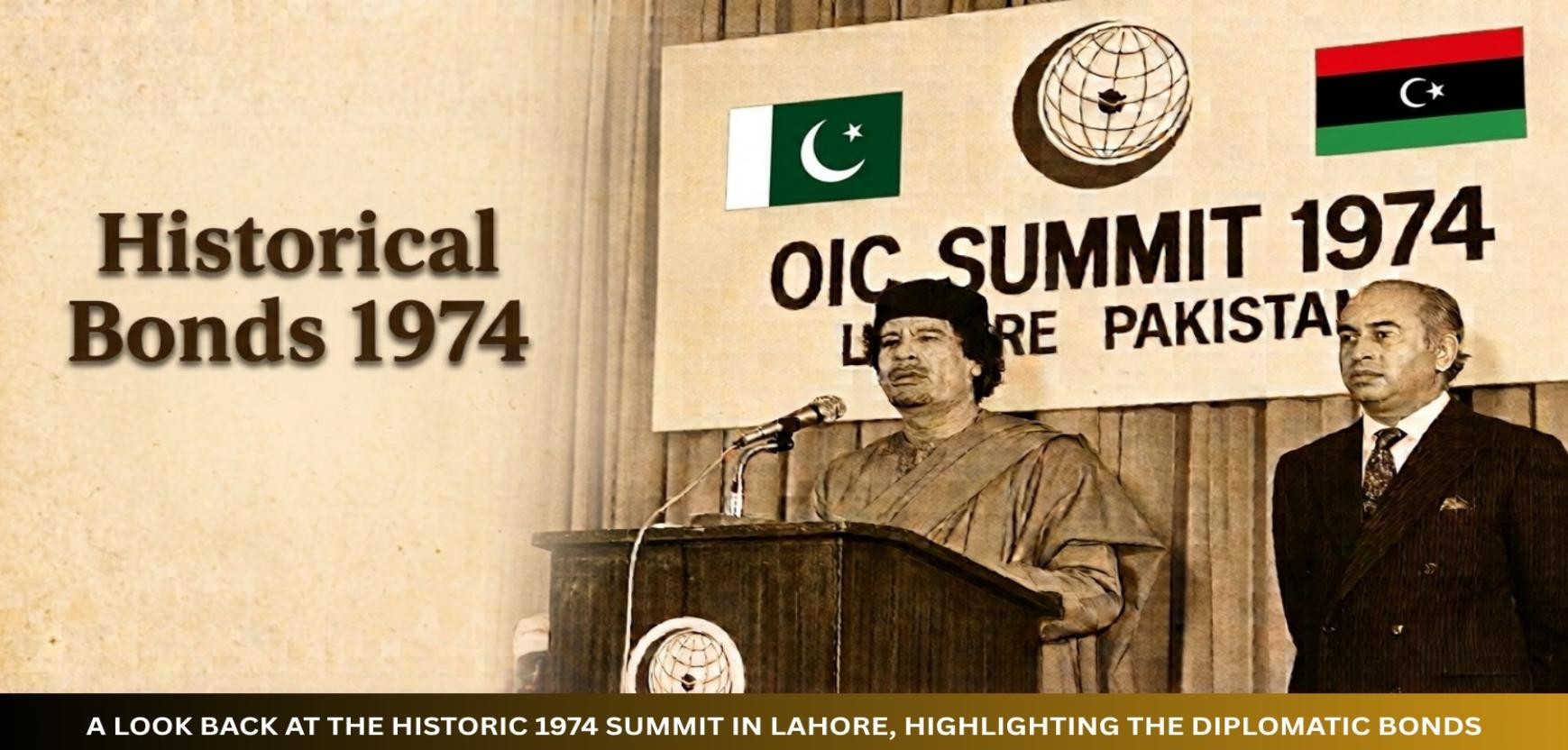
In 1974, Colonel Muammar Gaddafi of Libya visited Pakistan to attend the second OIC summit. During his speech, he advocated Pakistan's right to pursue nuclear weapons for the balance of power against India. Furthermore, former PM Zulfiqar Ali Bhutto paid tribute to him and also named the iconic stadium in Lahore: Gaddafi Stadium. Following the 2011 NATO-backed overthrow of Muammar Gaddafi, Libya has been divided into two parallel power centers. Pakistan is quietly mediating between Libya's eastern and western factions. Regional countries have also acknowledged the conflict-resolution efforts of Pakistan.
In Libya, the UN-recognized Government of National Unity (GNU) is placed in Western Libya, led by Abdelhamid al-Dabiba; while General Khalifa Haftar and his Libyan National Army (LNA) are influential in Eastern Libya. In the proposed plan, a 36-month transitional government would be established to find a sustainable political solution for long-standing disputes over power, oil revenues, and control of state institutions.
|
|
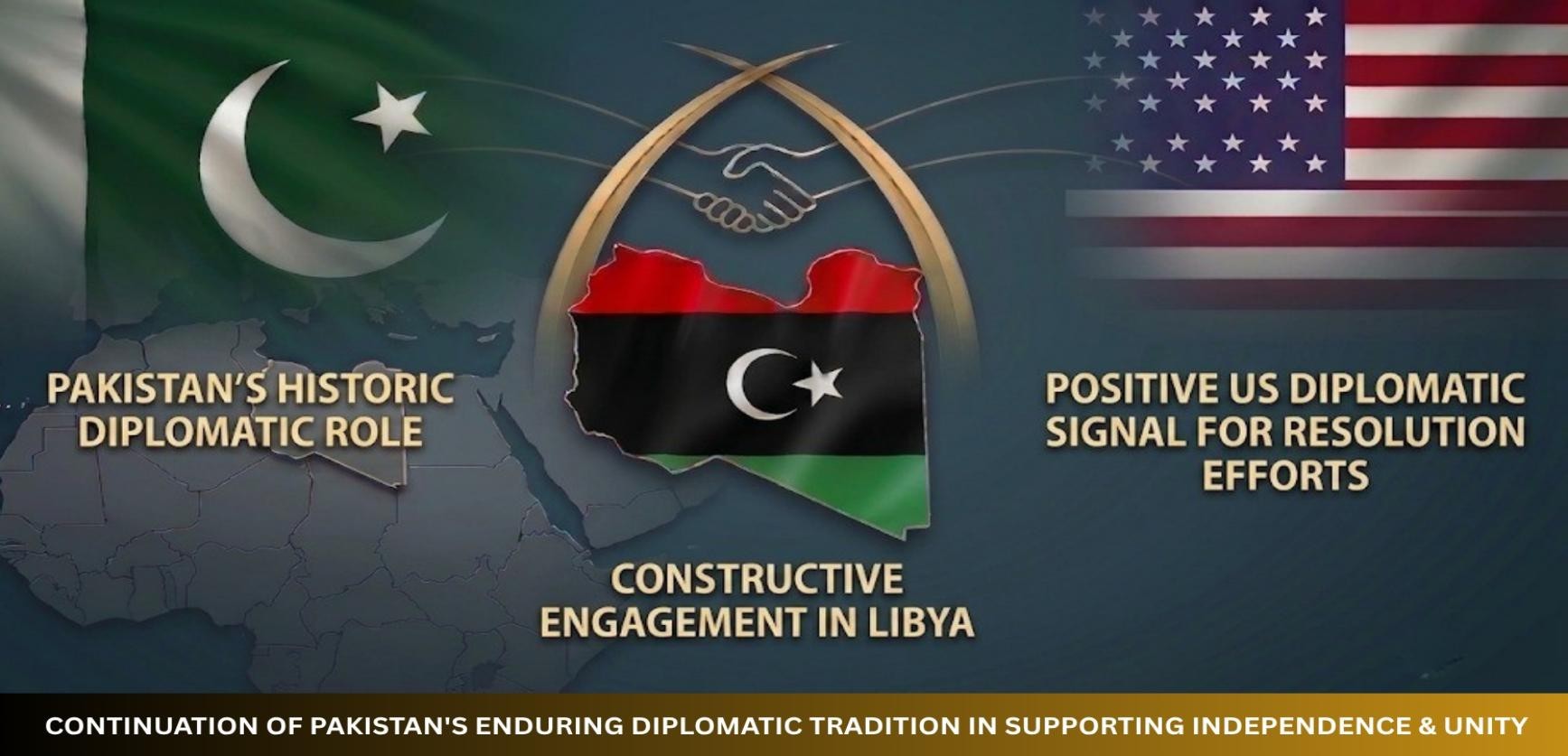
Pakistan’s historical diplomatic relations with North African countries, as well as its constructive engagement with both sides of Libya, make it a credible mediator.
Meeting of Sadam Hafter with CDF Field Marshal Asim Munir, and after this, his visit to Washington and meeting with US Secretary of State Marco Rubio are of great importance. On this occasion, the US State Department issued a statement saying that Marco Rubio welcomed the efforts of Libyan leaders to end national division and reiterated the United States’ full support for Libya's unity, which is being seen as a positive diplomatic signal for Pakistan’s ongoing conflict-resolution efforts.
This initiative represents the continuation of Pakistan's enduring diplomatic tradition, which played a pivotal role in supporting the independence movements across North Africa.
Diving into history, it is found that in 1952, Morocco was fighting for independence from France. Sultan Muhammad V sent Ahmed Balafrej to speak at the Security Council, but France blocked him because Morocco was still a French colony. At that moment, Pakistan immediately opened the Pakistani Embassy in Washington, DC, at midnight and issued Ahmed Balafrej a Pakistani diplomatic passport. The next day, Ahmed Balafrej spoke for Morocco's struggle at the UN Security Council as a Pakistani. That was a reflection of Pakistan's diplomatic support to Morocco's struggle.
Moreover, in 1958, four years before Algeria gained independence, Pakistan permitted the establishment of an Algerian diplomatic mission in Karachi. It also gave diplomatic passports to the leaders of the Algerian freedom movement, including Ahmed Ben Bella, the first President of Algeria. These passports helped them travel, speak, and raise global awareness for millions of
Algerians living under colonial rule.
|
|
Then comes Tunisia. Tunisia gained independence in 1956. Pakistani diplomats played a proactive role for the Tunisian cause. Therefore, a road in Tunisian capital, Tunis, Rue Ahmed Boukhari, is named after Pakistani diplomat and writer, Syed Ahmed Shah Bukhari, also known as Patras Bukhari in Pakistan. Moroccans fought for Morocco, Algerians fought for Algeria, and Tunisians fought for Tunisia.
Pakistan did not fight their wars, but Pakistan gave their cause a voice.
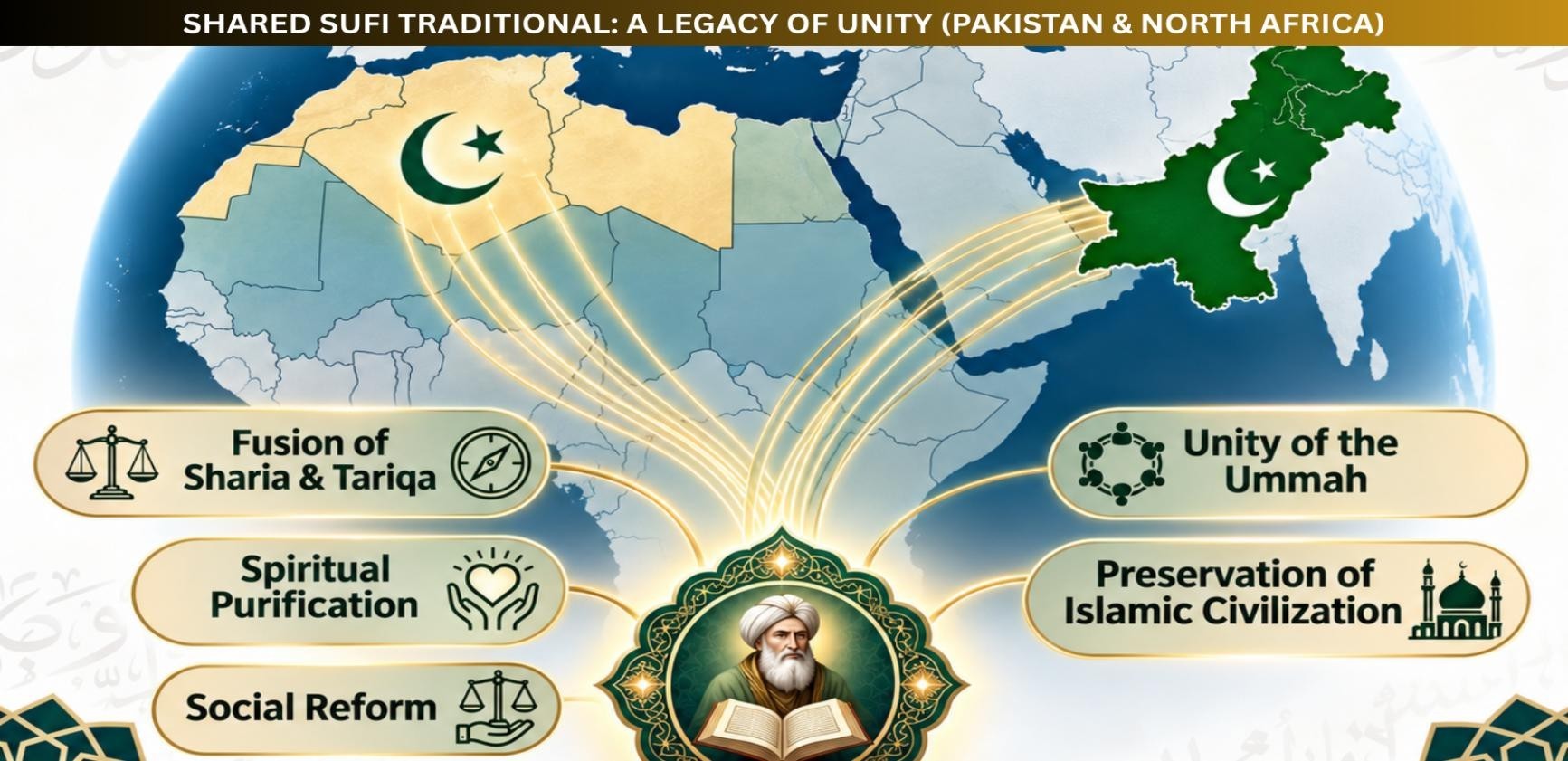
Pakistan and North African countries have deep-rooted and shared historical values, and their guiding philosophy is based on Sufism.
The Sufi traditions form a common intellectual, spiritual, and cultural heritage between North Africa and the Indo-Pak subcontinent. These Sufi orders are based on the intellectual and spiritual tradition of Shaykh Ibn Arabi. Although the Sufi orders of the two regions developed in different environments, their core values, namely the fusion of Sharia and
Tariqa, spiritual purification, social reform, unity of the Muslim Ummah, and preservation of Islamic civilization, are the same.
Pakistan and African countries, especially the states of North Africa, are sovereign nations and are deeply connected through their historical, religious, and cultural ties. These relations, built on a shared Islamic heritage, struggle against colonialism, mutual respect, and South-South cooperation, continue to provide a strong foundation between the two regions.
If Pakistan and North African countries further strengthen their partnership, they can capitalize on their complementary geostrategic, geoeconomic, and demographic advantages to advance shared development objectives.
It can also make Pakistan and African countries important partners for mutual prosperity, regional stability, and common development in the emerging multipolar world order.
|
|
There is a vast potential for trade investment, and economic cooperation between Pakistan and North African countries. North African countries, being members of the League of Arabs, the Euro-Mediterranean Partnership, and the African Continental Free Trade Agreement (AfCFTA), can become an important source of access for Pakistan to African and European markets. In July 2025, Pakistan and Algeria agreed to enhance energy, investment, an active role of the Joint Business Council (JBC), participation in trade exhibitions, and increasing business links, while Algeria described Pakistan as a strategic gateway for accessing African markets.
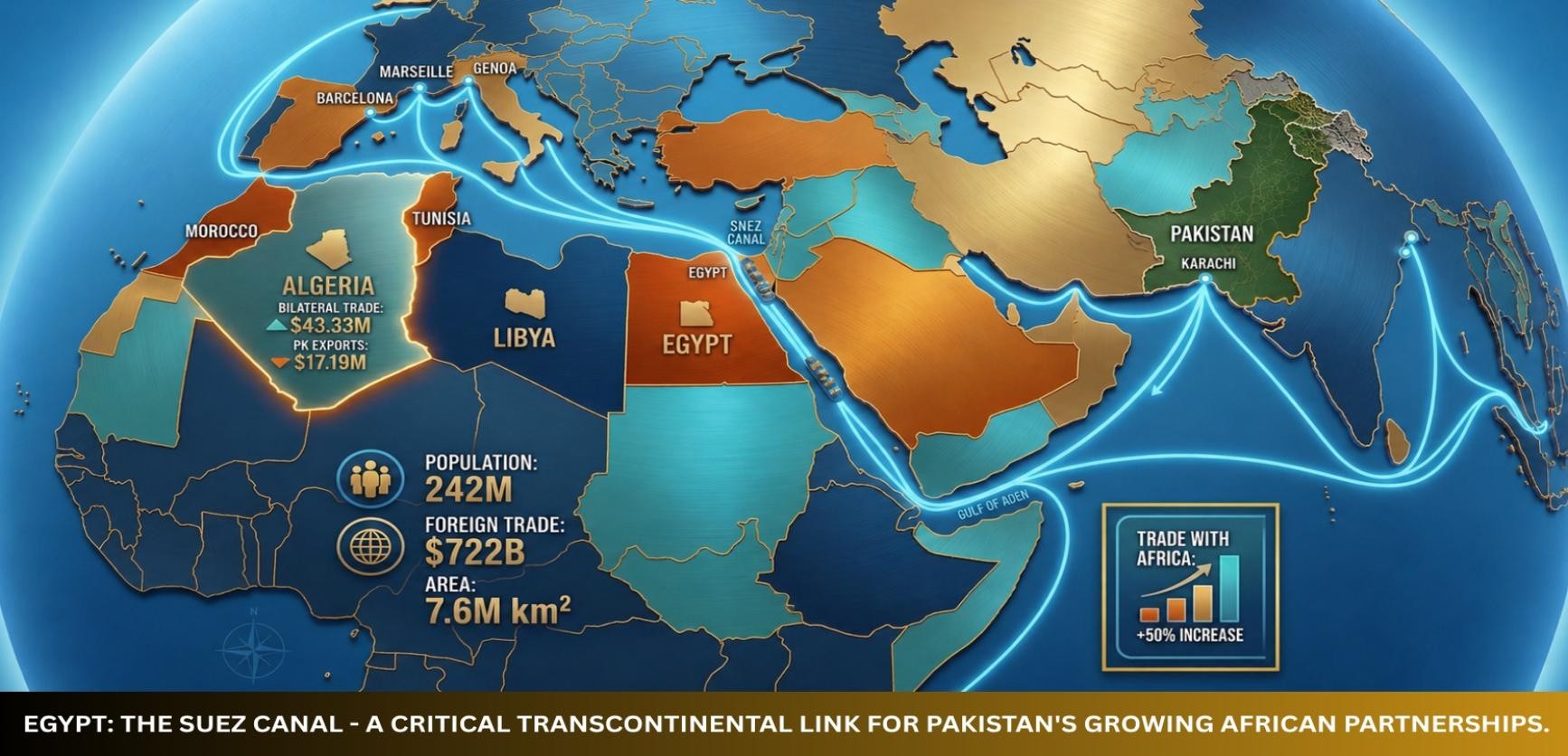
Egypt occupies a critical transcontinental position that links Africa to Europe and Asia. Through the Suez Canal and its maritime corridors, it provides the fastest and most efficient trade route to connect these continents, significantly reducing transit times and boosting bilateral trade. North Africa is an important economic region with a population of about 242 million, a foreign trade of $722 billion, and an area of 7.6 million square kilometers, while the current bilateral trade between Pakistan and Algeria is $43.93 million, of which
Pakistan's exports are $17.19 million. Moreover, Pakistan's overall trade with Africa has increased by nearly 50 percent in the last few years, indicating bright potential for stronger partnerships with the region in the future in the areas of trade, energy, defense, and investment.
In Libya’s peace process, Pakistan is following its Grundnorm policy of mediating and promoting peace beyond its borders.
To promote dialogue, reconciliation, and regional stability through principled diplomacy rather than coercive power.
|
|
|
To conclude, the relationship between Pakistan and African countries is based on a strong footing.
This is a continuation of Pakistan’s historic solidarity with African nations, demonstrated through its diplomatic support for anti-colonial struggles and in promoting the autonomous sovereignty of African peoples. Beyond the diplomatic dimension, the relationship between Pakistan and the countries of North Africa is anchored in deep historical interactions, a shared Islamic civilizational heritage, and expanding opportunities for South–South economic cooperation in trade, energy, investment, and connectivity.
|
|
Author: Muhammad Talha Saleem, MPhil Scholar, Quaid-i-Azam University, Islamabad.
|

P.O Box: 562, Islamabad, Pakistan | P.O Box: 780, Rickmansworth WD3 0NH, UK
info@muslim-institute.org | www.muslim-institute.org | unsubscribe
|
|


