|
|
Climate Diplomacy: Turning Environmental Crisis into a Pathway for Peace
|
|
|
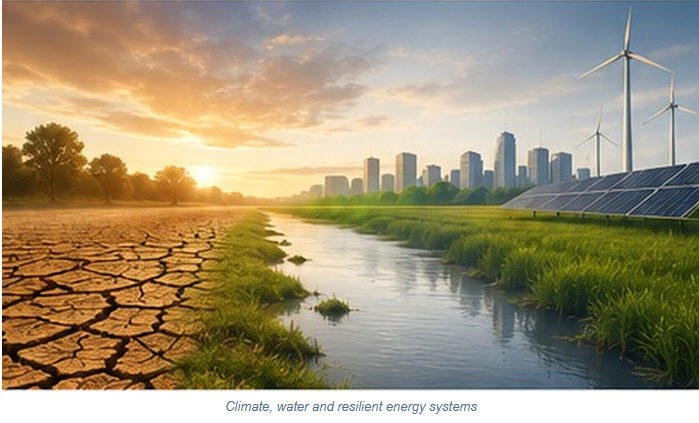
For decades, international security has been the realm of armies, borders, and old-fashioned geopolitics. Stability was assessed by states’ military strength, capacity to defend their territory, and capacity for strategic competition. Today, however, some of the deepest threats do not come from military mobilization. They can be seen in melting glaciers, decreasing water levels, irregular monsoon seasons, poor crop yields, rising sea levels, and climate-induced migration. Environmental degradation is now a lived reality, no longer an ecological problem, affecting social cohesion, economic resilience, migration patterns, and relations with the rest of the world, and even the definition of security itself, in Asia, Africa, and other regions of the Global South. However, focusing solely on disasters does not reveal important strategic opportunities. Climate change can be a threat multiplier through increased socioeconomic pressures, governance shortcomings, and resource competition, but it can also serve as a platform for preventive peacebuilding.
Environmental problems are transborder; thus, they help create structural incentives for states to cooperate rather than to compete. The core of climate diplomacy is international engagement, scientific cooperation, and co-governance of resources to help manage climate risks and foster political trust and collective security. Agricultural resources are vital to the livelihood of resource-dependent communities, and they are often affected by catastrophic floods or dry spells, which create significant challenges. The resulting farmers' losses, food price hikes, and rural-urban migration exacerbate the strain on housing, municipal infrastructure, and public services already under stress in cities. In addition, shared river basins are increasingly becoming flash points due to varying rainfall patterns in relation to water availability along river boundaries. These risks require a different kind of security – one that can be achieved through preventive measures based on diplomacy, sharing data and information in real time, and collaborating on disaster risk reduction, which is not possible through traditional military means, can reverse land degradation, restore depleted aquifers, or stabilize shifting climate systems.
This is a defining call to action, especially within the Global South. The developing world is challenged with a striking paradox: while it has played only a small role in historical greenhouse gas emissions, it suffers disproportionate damage because of its low adaptive capacity. The adverse effects of extreme weather events can overwhelm years of development work in just a few days, wrecking infrastructure, fueling public debt, and diverting government spending from development to emergency reconstruction. However, their physical weakness is also a diplomatic advantage. The collective voice of climate-vulnerable nations turns into global power when they negotiate together, and the operation of the Loss and Damage Fund is a prime example of a year-long advocacy campaign that has resulted in the structural recognition of losses due to climate change. In addition, joint scientific research and environmental monitoring are important neutral avenues of communication between states in times of general political tension.
|
|
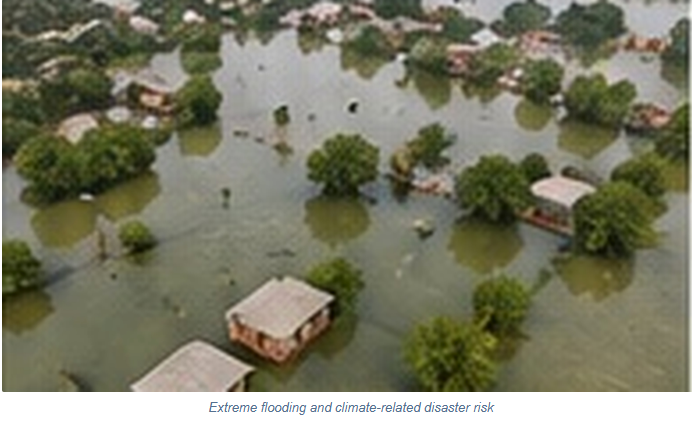
Pakistan is a great example of how acute vulnerability can be turned into global diplomacy. The catastrophic flooding in 2022, which affected over 33 million people and resulted in approximately $30 billion in damages and reconstruction requirements, was a stark reminder of the devastating impact of climate instability on developing nations. As the Chair of the Group of 77 (G77) and Chair of China at COP27, Pakistan contributed to the global consensus on loss and damage, advocated for climate vulnerability as a global equity and distributive justice issue. This advocacy contributed to a paradigm shift in global climate finance discussions from traditional, debt-based climate finance to accessible, non-debt climate finance. However, domestic institutional credibility is needed to maintain international leadership. The Government of Pakistan devolved environmental powers under the 18th Constitutional Amendment, thus increasing the role of provincial governments but also complicating coordination between federal institutions and local governments.
Moreover, realizing the benefits of international climate finance requires a transparent financial system, reliable climate data, and effective adaptation planning. True international climate leadership starts at home. To achieve lasting peace, climate diplomacy must focus on the tangible systems that link societies together: water, trade and infrastructure. The Indus River Basin remains a significant test site. The Indus Waters Treaty of 1960 has withstood decades of political tension but increased glacier melting and changing monsoon patterns in the Hindu Kush-Himalayan region call for new governance structures that prioritize the timely sharing of climate information and shared stewardship of the environment. Simultaneously, major economic projects, such as the China-Pakistan Economic Corridor (CPEC), need to consider future climate investments as a factor along with economic returns. Switching energy investment to solar, wind, and run-of-the-river hydropower, improving agricultural logistics, and developing climate-resilient port infrastructure at Gwadar and Karachi provide robustness to economic growth, which translates into enhanced ecological security.
|
|
Global climate finance systems must continue to clearly distinguish between adaptation and loss-and-damage mechanisms. Adaptation can be performed before disasters occur; loss and damage mechanisms are considered when adaptation limits are reached. Accessible, transparent, grant-based financing mechanisms will help developing states move towards resilience without adding to already high sovereign debt pressures. In addition to technology, finance, and policy, cultural legitimacy is needed to engage in effective environmental action. Preservation policies are effective when communities take ownership of preservation activities and values rather than obligations. In South Asia and the Islamic world, the ideas of Mizan (balance) and Khalifah (human stewardship), as well as literary traditions, offer key frameworks for thinking about human–nature relationships. When these cultural values are incorporated into governance at the local level, it enhances community involvement in reforestation, watershed protection,and sustainable farming, further demonstrating that environmental peacebuilding is a matter of gaining trust between people.
The climate crisis will inevitably change the world politics, and the effects will depend on how countries react. Stress may create new divisions and competition or new and unforeseen cooperation. Shared rivers, the protection of vulnerable communities, and cooperation on climate risks will be as much a part of the future of global peace as alliances of military forces and traditional diplomacy. Climate diplomacy is a paradigm shift in statecraft, particularly for Pakistan and the Global South, where building resilience, fostering cooperation, and prioritizing sustainability have emerged as the new core of international relations. As the climate crisis unfolds, it will inevitably alter the course of global politics, making shared ecological threats catalysts for diplomacy. Climate diplomacy is not only an environmental policy but also a tool of statecraft for Pakistan. While Pakistan has the lowest global emissions, it is on the front lines of climate vulnerability, and by leading the Loss and Damage Fund at COP27, it has shown that it can rise to the occasion and take a leadership role.
Islamabad's next step is to shift its strategic focus from international advocacy to local long-term resilience from commitments in the international arena. In the future, Pakistan can establish its position as a stabilizing player in the region through three specific initiatives: expanding hydrometeorological data sharing and glacier monitoring in the Hindu Kush-Himalayas, integrating climate-resilient criteria in large-scale infrastructure and investment initiatives, such as the CPEC, and enhancing domestic governance mechanisms and processes between the federal and provincial governments to effectively leverage international climate finance. Working in tandem, proactive and peace-oriented foreign policy and transparent domestic climate management will enhance Pakistan's role as an indispensable voice for climate justice and an anchor of regional stability.
|
|
About the Author: Dr. Muhammad Arslan Iqbal, Postdoctoral Research Fellow Faculty of Management Science and Economics
|

P.O Box: 562, Islamabad, Pakistan | P.O Box: 780, Rickmansworth WD3 0NH, UK
info@muslim-institute.org | www.muslim-institute.org | unsubscribe
|
|


