|
|
|
|
The Makkah Accord: A Human Model of Unity
|
|
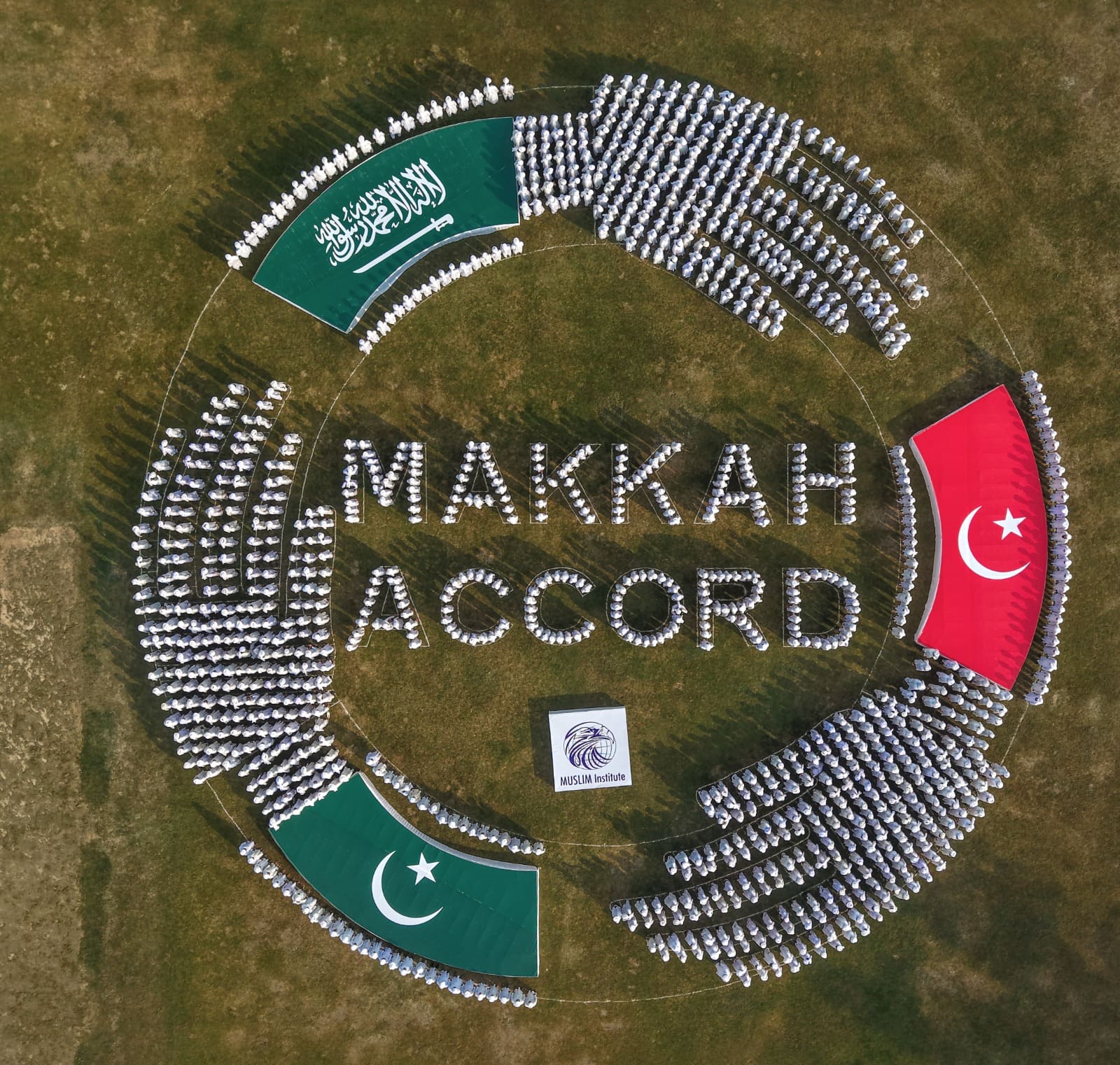
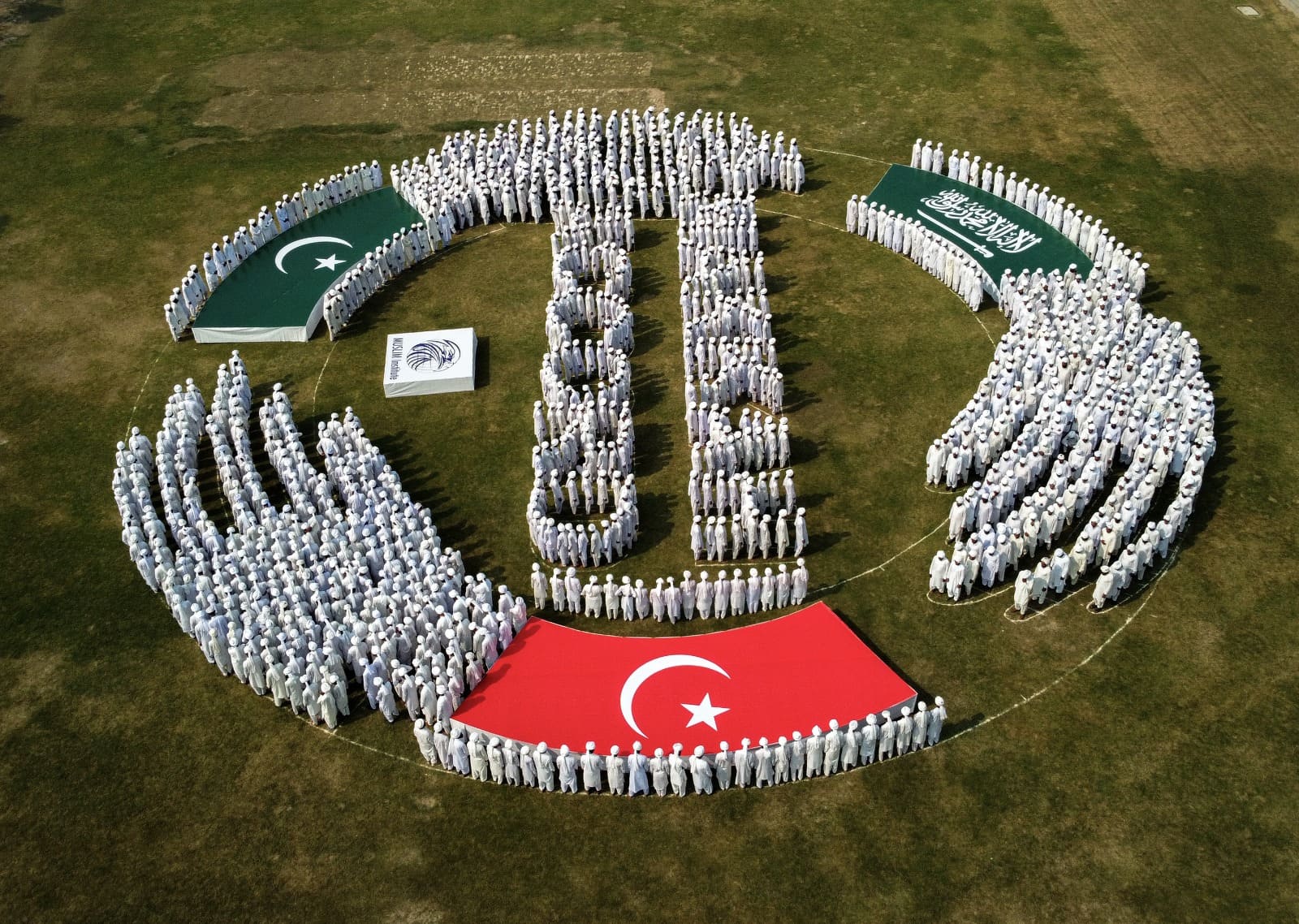
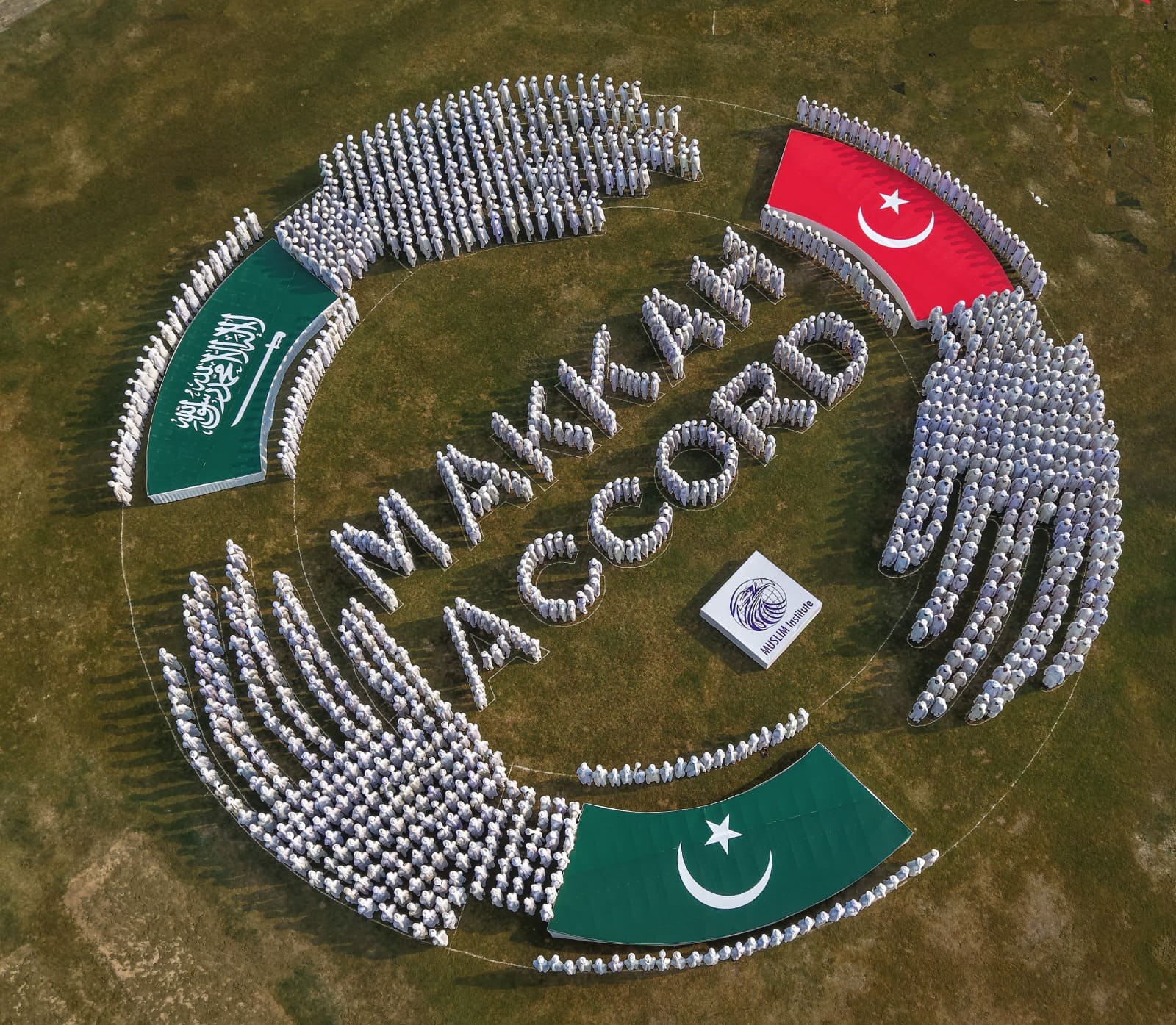
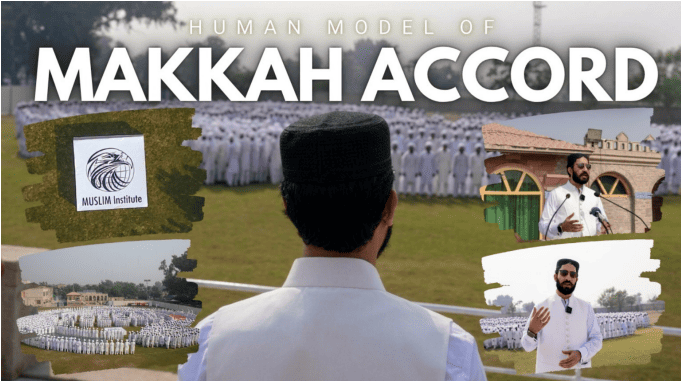
Thousands of participants, all dressed in white, formed a human model of the “Makkah Accord”. The event was organised by MUSLIM Institute on 20th October at the Shrine of Hadhrat Sultan Bahoo (R.A). The formation showed that the peace and security of the Muslim world matters to ordinary citizens as much as to governments and that the sanctity of Makkah and Madinah is a shared trust.
The participants chanted slogans "Islam is Peace,"
"We are One," "Three Flags One Soul, Saudia
Turkiye Pakistan"”. The white colour was chosen
deliberately. It is the colour of purity, humility, and
unity, and it recalls the equality in which rank,
nationality, and wealth fall away. Arranged as one
image, the participants conveyed that the call for
stability comes from the collective conscience and not from any single faction or interest.
|
|
“
|
A human
model also teaches a simple lesson: no single
participant can form the picture alone, and the
picture is complete only when everyone holds their
place. Collective security works the same way.
|
|
|
|
The Makkah Joint Defence Agreement, concluded by the Kingdom of Saudi Arabia, the Republic of Türkiye, and the Islamic Republic of Pakistan on August 7, 2026, has drawn wide international attention. It is built on the recognition that responsible states may organise themselves to meet present and foreseeable threats, a right that international law affirms, and diplomatic history has long practised.
The three signatories share a common reading of a
turbulent environment. Conflicts across the region are straining the established order and may leave a
strategic vacuum behind them. A vacuum of that
kind rarely stays empty peacefully, and it invites
rivalry, opportunism, and instability that no society
can afford.
The partners bring distinct yet complementary
strengths. Saudi Arabia holds a rare combination of
assets: a pivotal position between continents and sea
lanes, major energy resources and surplus
production capacity, substantial financial weight, a
growing, diversified economy under Vision 2030,
and diplomatic reach across many capitals. It also
carries the unique responsibility of hosting and
serving the Haramain, the two holiest sites in Islam.
Türkiye offers geographic reach across Europe, Asia, and
the Middle East, a capable defence industry and significant
diplomatic experience, and it is also a NATO member.
Pakistan contributes a large, battle-tested military, strategic
capability.
Together, these strengths form a stabilising weight in a
region that badly needs balance. The Accord also leaves
room for other like-minded states to join over time,
provided they share its objectives of peace, deterrence, and
mutual respect.
History shows that peace is rarely the product of strength
alone. It grows where strength is joined by wisdom,
restraint, and shared purpose. When thousands stand in one
formation, in one colour and with one intention, they remind
leaders and citizens alike what the Ummah can achieve
together.
|
|
|
Speaking on the occasion, Chairman MUSLIM
Institute Sahibzada Sultan Ahmed Ali said:
|
|
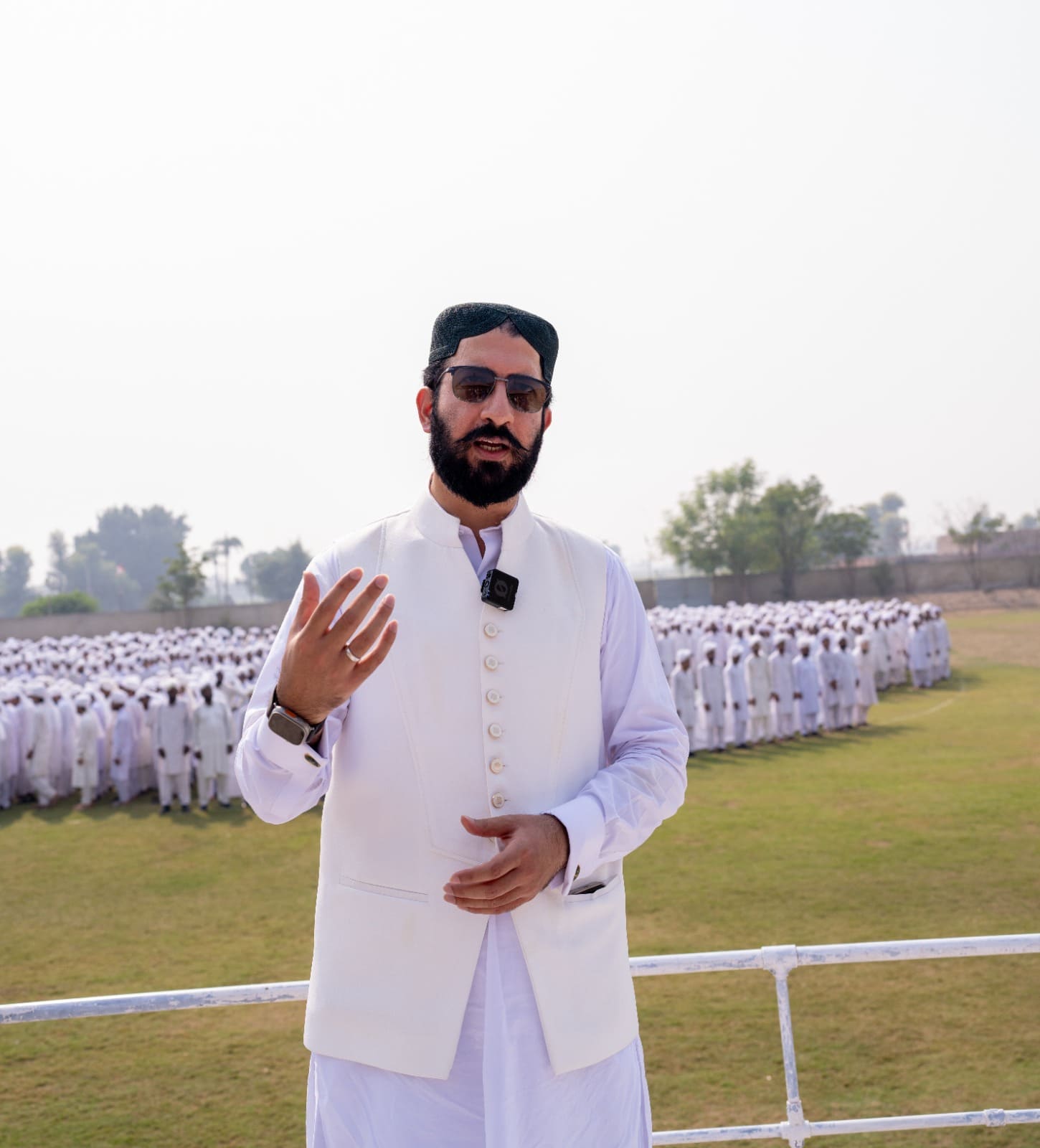
Sahibzada Sultan Ahmed Ali
Chairman, MUSLIM Institute
|
“Today’s formation is an act of solidarity with the Makkah
Joint Defence Agreement between the three brotherly
Muslim countries: Pakistan, Saudi Arabia and Türkiye.
This human model formation presents our tribute and
extends our solidarity. We see this pact as an auspicious
sign for our self-defence, especially in the changing
scenario of the Middle East and the world in general. It
was much needed, as Article 51 of the UN Charter gives
the right to one state individually and to many states
collectively to take steps to ensure their territorial integrity
and self-defence. The agreement is, therefore, both
essential and timely. One thing we are clear about and
want to tell the world is that this agreement is not against
anyone. It is for our self-defence, and it places greater
emphasis on capacity building and deterrence.
”
A unique aspect is that, since the concept of the nationstate emerged, this is the first time three major Muslim
powers (Türkiye, Pakistan and Saudi Arabia), each
influential among Muslim countries and each with its own
attributes, have come together in such a pact. There have
been many defence and strategic cooperation agreements
before, but they were mainly bilateral. I believe this is the
first-ever trilateral agreement between three major Muslim countries, and it has the capacity to engage other regional
powers. We are hopeful and can foresee that because of its
effectiveness and seriousness, many other countries will
come forward and join it in the future. We extend our best
wishes and solidarity to the leadership of all three
countries, and we hope to defend our holiest sites, our
territorial integrity, and our people in these three
countries.”
|
|
|
|
|
|
Pakistan
P.O Box: 562,
Islamabad, Pakistan.
|
United Kingdom
P.O Box: 780, Rickmansworth,
WD3 0NH, United Kingdom.
|
Connect Directly
|
|
Follow MUSLIM Institute Across Social Media
|
© 2026 MUSLIM Institute. All Rights Reserved.
Unsubscribe
|
|
|