|
|
|
|
“We will make sure that you (Pakistan) are isolated around the world.” Prime Minister of India Narendra Modi once made a promise to the Indian people in a speech at a rally in Kerala in September, 2016.
|
|
|
It was around 2:15 a.m. on Monday, June 15, 2026, and most people in Pakistan were asleep. Meanwhile, the world awaited significant news following a tense series of clashes in the Middle East. Suddenly, the Prime Minister of Pakistan, Shahbaz Sharif, took to X to announce a historic "Peace Deal" between the USA and Iran. This was not the first time a Pakistani Prime Minister had used the platform to surprise the world. Previously,
on April 8, 2026, he had announced an "immediate ceasefire" between the US and Iran at around 4:50 a.m. This announcement came after threats from President Trump, who had warned that "a whole civilisation will die tonight." The ceasefire declared on April 8 was the first sign of relief for people around the world after the start of the US and Israeli attacks on Iran on February 28, 2026.
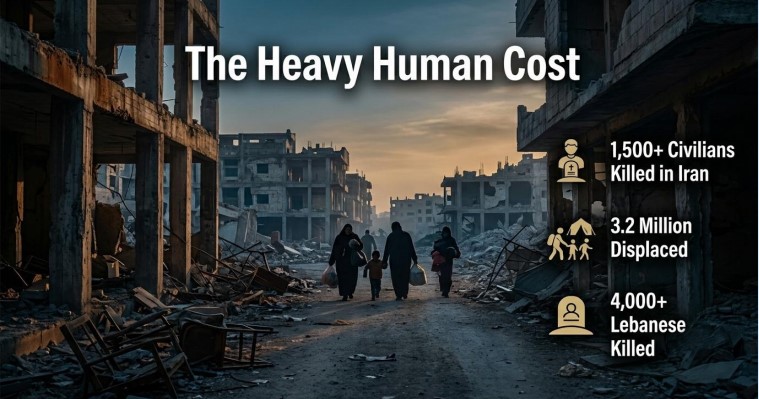
As a result of the war, more than 1,500 civilians have been killed so far in Iran, including at least 175 people killed by a
U.S. strike on an Iranian elementary school, and up to 3.2 million have been displaced. The human and economic toll of the conflict continues to mount rapidly. At least 4,000 Lebanese citizens have been killed, while Pentagon statistics report 13 U.S. service members killed and roughly 400 wounded. The reach of the
war has also expanded across the region, with Iranian drone and missile attacks causing deaths, injuries and infrastructure damages in Gulf states including the United Arab Emirates, Kuwait, Bahrain, Oman and Qatar.
|
|
Beyond the immediate casualties, the financial fallout is devastating. In June, the Institute for Economics and Peace estimated that the U.S.-Iran War is shrinking global GDP by approximately
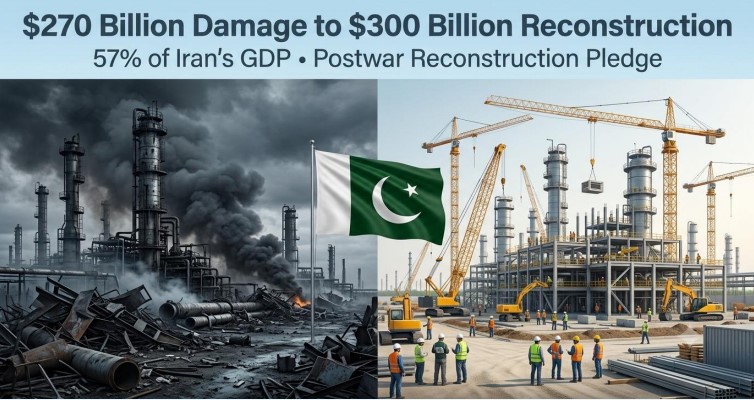
$2.2 trillion annually. The direct financial burden includes $29 billion borne by American taxpayers, while Iran has suffered an estimated $270 billion in direct and indirect damages, equating to roughly 57% of its GDP.
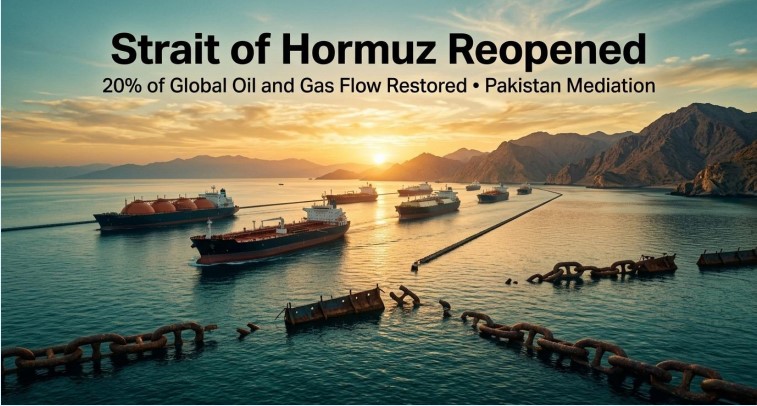
This war has had severe global economic impacts, as blockades and shipping risks at the Strait of Hormuz, a crucial checkpoint through which 20% of global oil and gas flows, have caused massive disruptions.
The International Monetary Fund estimates a 7% cumulative output loss over five years for the Gulf States, with damages to more than 80 regional energy facilities expected to cost $58 billion to repair. The ongoing Israeli attacks have resulted in over 3,700 deaths and 11,600 injuries in Lebanon, while forcing over 1
million people to flee their homes, accounting for more than 20% of the country's population. The widespread destruction of housing, medical facilities, and infrastructure has compounded Lebanon's existing financial crisis. Local estimates report that over 50,000 housing units were affected. Of these, approximately 28,000 were destroyed, while over 52,000 sustained partial or minor damage.
Earlier, on April 11–12, 2026, by hosting the 21-hour “Islamabad Talks” marathon between US Vice President JD Vance and Iranian Parliament Speaker Mohammad Bagher Ghalibaf, Pakistan demonstrated that practical engagement is more effective than geopolitical posturing in a crisis. This marked the first instance of direct talks between Iran and the US since the 1979 Islamic Revolution. Although these discussions did not yield immediate results, they laid the groundwork for future engagements.
It was the resilient leadership of Pakistan that maintained hope for diplomacy, engaging not only with Iran but also with regional partners and visited Iran more than twice.
On June 17, 2026, after the announcement of the deal, it was signed electronically by US President Donald Trump, Iranian President Masoud Pezeshkian and Prime Minister of Shahbaz Sharif as key mediator. The Islamabad Memorandum of Understanding
(MoU) establishes immediately halt hostilities and open a 60-day window for comprehensive peace treaty negotiations. Under the military and security terms, both nations agree to a permanent termination of military operation, including conflicts in
Lebanon, while the US commits to lifting its naval blockade within 30 days and moving its forces away from Iranian borders.
In exchange, Iran will grant free, safe passage to commercial shipping through the critical Strait of Hormuz to restore global oil exports and trade volumes. Economically and strategically, the MoU outlines a major commitment from the US
and its allies to provide a minimum of
$300 billion toward postwar reconstruction in Iran, alongside a systematic rollback of international sanctions and immediate Treasury waivers for Iranian oil exports. On the nuclear front, Iran explicitly reaffirms its commitment to never develop nuclear weapons, freezing its nuclear program under IAEA supervision during the 60-day negotiation period.
|
|
Following high-level talks mediated by Qatar and Pakistan in Switzerland on 21 June 2026, the US and Iran agreed to a roadmap to secure a final deal within 60 days.
After a joint statement announced by Pakistan and Qatar, Key outcomes include the creation of a “de-confliction cell” to manage a Lebanon ceasefire, direct communication channels to restore security in the Strait of Hormuz, and Iran’s agreement to allow IAEA inspectors back into the country.
However, friction remains over economic relief, as Iran claims the US agreed to waive oil sanctions.
Moving forward, negotiators face intense technical hurdles over the next two months, particularly regarding the exact timeline for lifting sanctions and US
demands to oversee the dilution of Iran’s enriched uranium stockpile. Furthermore, the deal will be heavily tested on the ground by regional actors excluded from the talks,
forcing Israel into a strategic dilemma over whether to compromise on its security zones in southern Lebanon under this new US-Iran dynamic.
Leaders from around the world, including those from the US, Iran, China, the European Union, the Gulf states, the United Nations Secretary-General, and African nations, praised Pakistan's leadership for its mediatory role during this complex and challenging situation. At this pivotal moment in history, Pakistan is emerging as a peacemaker on the global stage and a peace maker and security stabilizer for the region.
In contrast, India's current government, under the leadership of Narendra Modi, has found itself sidelined in this significant breakthrough in the Middle East. For years, India has promoted the narrative of being a Vishwaguru, or global teacher, and positioned itself as a vital pillar of the emerging international order.
Prime Minister Modi of India is currently facing significant internal criticism from opposition parties, academics, experts, the media, retired military personnel, and the general public due to his foreign policy failures.
Modi's decade-long efforts to diplomatically isolate Pakistan have ultimately failed.
In a notable interview, former Research and Analysis Wing (RAW) chief A.S. Dulat acknowledged that New Delhi's attempts to push Pakistan into global isolation have not succeeded, despite extensive international lobbying.
Michael Kugelman, a senior fellow on South Asia at the Atlantic Council think tank, commented that “Certainly, India’s strategy of undermining and isolating Pakistan, both regionally and globally, has backfired significantly." Congress leaders, including Rahul Gandhi, have questioned Modi's policies, asking about the status of India's image as a “Vishwaguru” in this context. Gandhi criticized the
government's foreign policy approach as ineffective and claimed that India had been sidelined in international diplomacy. He remarked that the foreign policy has become overly personalised.
|
|
|
“You can see the result—people view it as a universal joke”, stated Gandhi. Meanwhile, Indian politician and author Shashi Tharoor stated that Pakistan has emerged as a central player and a net security provider on the global stage.
|
|
|
For years, India has invested a significant amount of diplomatic effort, economic influence, and strategic communication in one main objective: the total international isolation of Pakistan. This strategy relied on misinformation, propaganda, and diplomatic manoeuvring.
The landmark 2020 investigative report by EU DisinfoLab, titled "Indian Chronicles," revealed that New Delhi’s approach was not merely a series of typical diplomatic efforts; it was a coordinated psychological and information operation spanning 15 years. The report exposed an extensive network of hundreds of fake media outlets created to portray Islamabad as an international pariah and to establish a narrative aimed
at ensuring Pakistan’s permanent isolation.
We have seen some developments for reviving bilateral dialogue sparked last month following a surge of emerging voices within India advocating for engagement with Pakistan. This push for renewed contact came from high-profile figures, including RSS General Secretary Dattatreya Hosabale, a former Indian army chief, a former head of the Research and Analysis Wing (RAW), and political leaders from occupied Jammu and Kashmir.
A decade later, Pakistan is actively engaging with various global powers, including Washington, Beijing, Tehran, and Riyadh. The nation has successfully facilitated not only a ceasefire but also a historic agreement between Iran and the United States.
President Donald Trump has credited Pakistan multiple times for preventing a global catastrophe, a point that New Delhi has chosen not to formally acknowledge.
When the international order faced a significant threat of full-scale conflict between Washington and Tehran, it was Islamabad, rather than Delhi, that intervened to avert disaster. As hostilities have ceased, the illusory
concept of "Vishwaguru," which was primarily based on propaganda, has begun to dissipate.
|
|
Author: Muhammad Mehboob, Research Associate, MUSLIM Institute
|

P.O Box: 562, Islamabad, Pakistan | P.O Box: 780, Rickmansworth WD3 0NH, UK
info@muslim-institute.org | www.muslim-institute.org | unsubscribe
|
|


