|
||||||
|
||||||
Black Day of Indian Occupation of Junagadh |
||||||
|
||||||
|
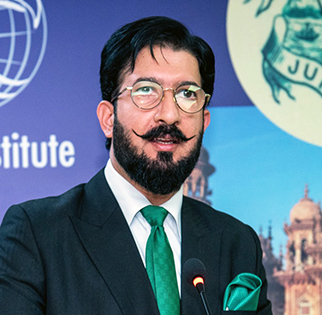
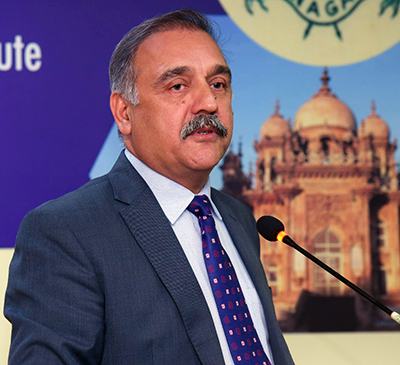
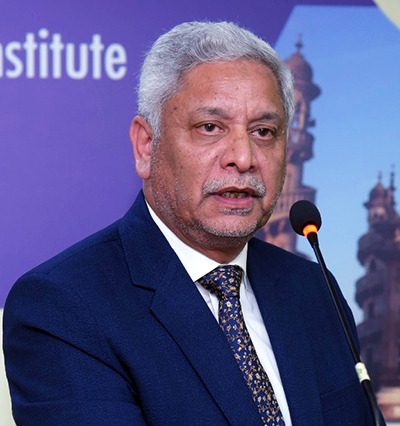
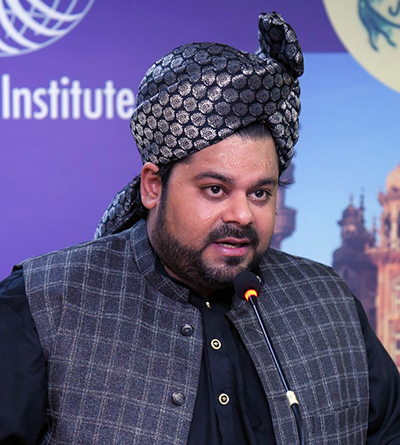
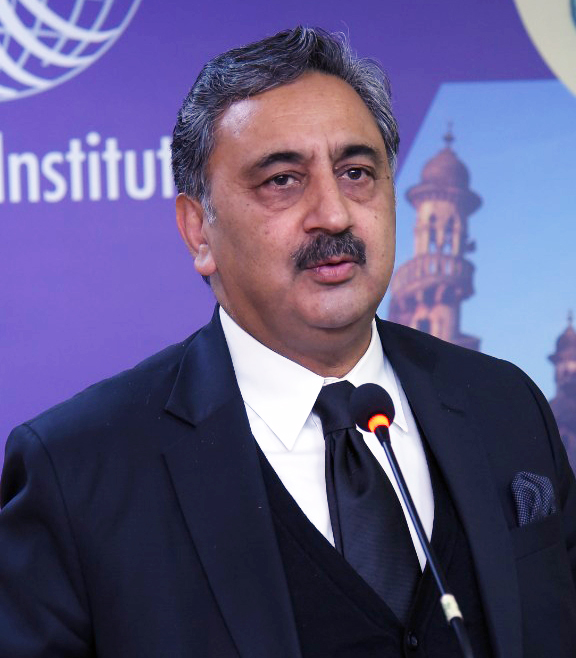
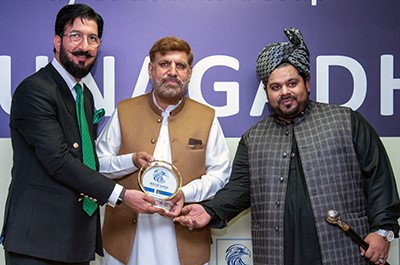
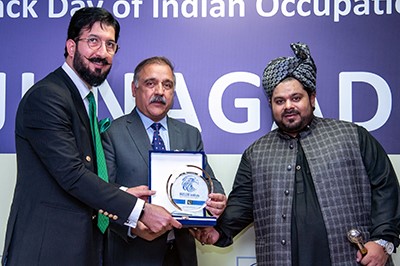
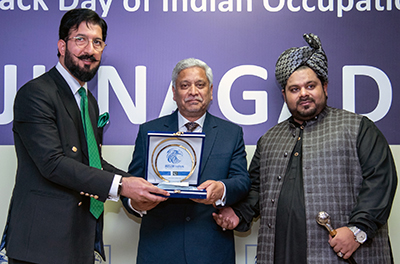
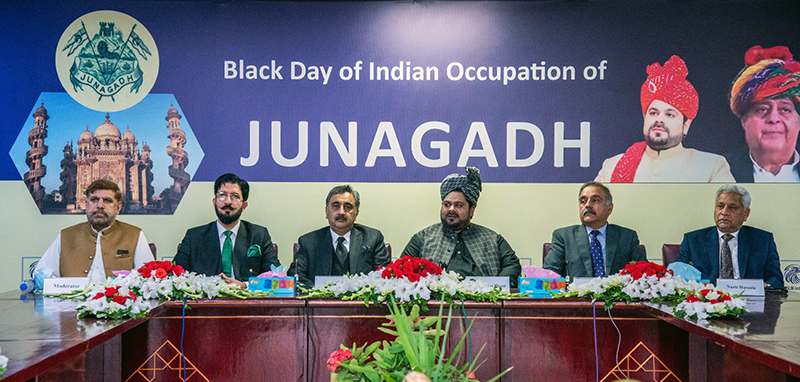
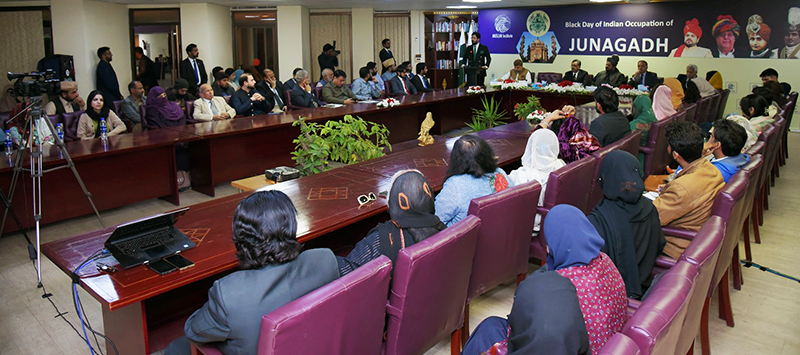
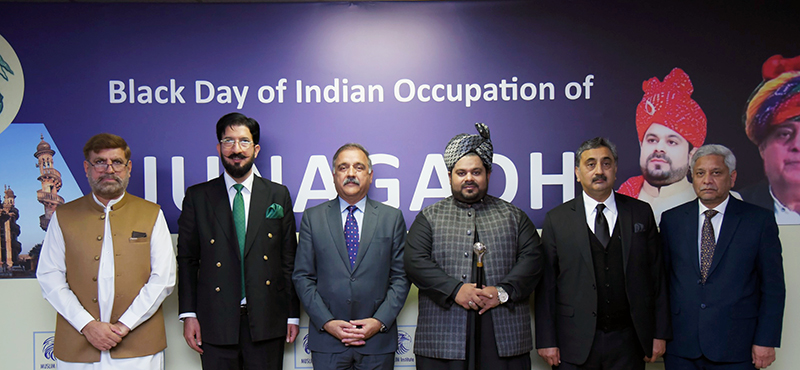
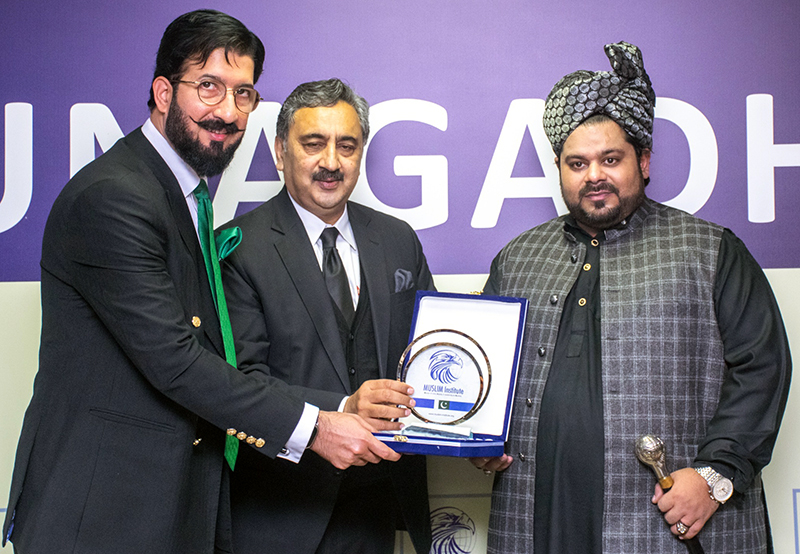
MUSLIM Institute organized a Seminar "Black Day of Indian Occupation of Junagadh" on Tuesday November 11, 2025 at National Library of Pakistan, Islamabad. Mr. Ahmer Bilal Soofi, Former Federal Minister for Law, Justice & Parliamentary Affairs, chaired the session and H.H Nawab Ali Murtaza Khanji (Sovereign Ruler of Junagadh State) was Chief Guest on the occasion. Sahibzada Sultan Ahmed Ali, Chairman of the MUSLIM Institute, delivered the welcoming address and the vote of thanks. Other dignitaries addressing the seminar included Maj. Gen. (R) Zahid Mehmood, Defence & Security Analyst, and Prof. Dr. Nazir Hussain, Former Dean of Social Sciences, Quaid-i-Azam University, Islamabad. The session proceedings were moderated by Dr. Abdul Basit Mujahid, Dept. of History, Allama Iqbal Open University, Islamabad. Deans, Professors, academics, research institute representatives, and people from other walks of life participated in the seminar. |
||||||
A brief summary of the remarks shared by the speakers is observed as follows: |
||||||
|
||||||
|
India's occupation of Junagadh was an act of aggression characterized by coercion, manipulation, seizure, and injustice. Legally, Junagadh remains part of Pakistan, while its occupation rests with India. The issue of Junagadh is distinct from that of Kashmir. In Kashmir, the dispute arose from a public revolt and the right to self-determination, for which a referendum was proposed. In the case of Junagadh, however, the sovereign ruler had already signed the Instrument of Accession with Pakistan, making the Nawab of Junagadh the legal custodian of the state's case. According to international law, Pakistan should formally assess the basis of India's illegal occupation, which has persisted for 78 years, and evaluate the resources that have been exploited to generate revenue under this unlawful control. Recent reports indicate that Junagadh's annual production of limestone amounts to approximately 3 million tons, while the Government of India earns around 1,000 crore Indian rupees annually from the region. There have also been reports of gypsum, china clay, and oil and gas explorations. International instruments such as the Fourth Geneva Convention, the Rome Statute, the Nuremberg Principles, and the Hague Regulations prohibit occupying powers from looting or exploiting local resources. Likewise, UN General Assembly resolutions forbid the exploitation of natural resources by occupying forces. These legal precedents can serve as a strong foundation for Pakistan's case. Therefore, Pakistan must assert its rightful ownership of Junagadh State at international forums and pursue the matter through legal and diplomatic channels. |
||||||
|
||||||
|
In this world, nations have learned how to wage wars, revive causes, and stand firmly by their principles concerning the integral parts of their statehood. Pakistan's greatest challenge today lies in confronting the entrenched mindset of its neighboring country, a mindset that has persisted throughout history. We have studied our past, conducted research, and identified our challenges. What Pakistan needs now is decisive action, an action inspired by the spirit of Badr, guided by wisdom and intellect. True strength of a nation comes from strategic thinking, historical consciousness, and knowledge. India's hegemonic ambitions are nothing new, they are ingrained in its political character. Even in the case of Jammu & Kashmir, false narratives were constructed, claiming that Pakistani tribesmen entered first, whereas, in reality, the initial forces belonged to Patiala. Junagadh and other princely states suffered deliberate destabilization and eventual occupation. The foundation of Pakistan's armed forces is built upon faith, piety, and struggle in the path of Allah. Operation Bunyan-ul-Marsus demonstrated Pakistan's strength across all domains. Wherever Pakistan's sovereignty, borders, water resources, Jammu & Kashmir, or nuclear assets are threatened, the country will respond with the full spectrum of its power. The real challenge lies in the absence of a unified national response to India's revocation of Articles 370 and 35A in Occupied Jammu & Kashmir. Yet, the discourse on Junagadh, Hyderabad, and Jammu & Kashmir will continue, it cannot and will not be silenced. |
||||||
|
||||||
|
The core issue surrounding Junagadh is that, on the internet, the prevailing narrative is largely Indian. The Pakistani perspective remains obscured because our researchers have not prioritized the subject, resulting in limited publications and academic engagement. Since 2014, some progress has been made, thesis, articles, and books have appeared but there has not been a sustained academic effort on Junagadh comparable to that on Kashmir. It is therefore suggested to include a chapter on Junagadh in Pakistan's history curriculum, as this could make a significant difference in shaping future discourse. Three princely states had disputed statuses at the time of partition: Jammu and Kashmir, Hyderabad, and Junagadh. Each was treated differently, yet the underlying issue was the same. The Khanji dynasty of Junagadh possesses a historical claim spanning nearly two centuries, having ruled the state since the 1750s, an enduring foundation for Pakistan's legal and historical position. India's actions, including demographic engineering and the staging of a so-called plebiscite that failed to meet international standards, were part of a calculated strategy designed to legitimize its occupation and influence the global narrative. To counter this, universities, researchers, media, and civil society must collaborate to rebuild and promote Pakistan's rightful narrative. Teachers and scholars should systematically explore Junagadh's legal, historical, and political dimensions so that it becomes an integral part of the national academic and policy agenda. |
||||||
|
||||||
|
||||||
|
Before the Partition of India, Junagadh was the second largest and the seventh richest among the 562 princely states, covering 3,500 square miles and possessing 16 ports, with Veraval being the largest. On 15 August 1947, Nawab Mahabat Khanji, after consultation with the State Council, declared accession to Pakistan, a decision supported by the Nawab, his community, and state representatives. Despite India's political and military pressure, the Nawab stood firm and legally formalized accession through an Instrument of Accession signed by Quaid e Azam Muhammad Ali Jinnah and Nawab Mahabat Khanji. However, India imposed an economic blockade, supported armed gangs, and ultimately sent regular troops, occupying Junagadh on 9 November 1947, the first violation of Pakistan's international borders. Pakistan raised the matter in the United Nations Security Council in 1948, and Resolution No. 39 established a commission to resolve such disputes, but the issue remains unresolved to this day. The Day of Junagadh's dispossession reminds us that Junagadh lawfully acceded to Pakistan, and India's occupation remains unlawful. The Babi family's sacrifices stand as an example of steadfastness in principle and loyalty to Pakistan.
As the sovereign ruler of Junagadh State, the message to Indian government is clear:
|
||||||
|
||||||
|
||||||
|
Certain misconceptions exist, such as the belief that supporting Junagadh would harm the Kashmir cause, which is absolutely incorrect from an international law point of view. One important research task is to take young researchers back to the 1940s and examine why India was quietly using the self-determination argument in contradictory ways, on one hand, endorsing the Instrument of Accession, and on the other, opposing it. A comparative assessment of the situation in Hyderabad, Junagadh, and Kashmir with legal, political, and historical view point is essential to highlight these contradictions. From the perspective of international law, particularly the Vienna Convention on the Law of Treaties, this Instrument of Accession of Junagadh to Pakistan is still valid, and Pakistan legally holds the title to Junagadh even without physical control. Therefore, Pakistan has the right to question the disposal of Junagadh's assets and raise objections whenever progress is made in licensing for mines or minerals. Under the 1982 Law of the Sea Convention, Pakistan also has the right to object to any shipping or mining licenses granted by India in the region, maintaining protection over Junagadh's resources. The 1949 Geneva Convention, relating to the law of occupation, and precedents such as Gibraltar provide relevant legal frameworks that can be used to strengthen Pakistan's position on Junagarh. |
||||||
|
||||||
|
In historical context, the Somnath temple lies within Junagarh, where the earliest campaigns of the Ghaznavid dynasty began. Junagadh has been a historical base, deeply connected to our heritage and ancestry. The Nawab of Junagadh is viewed as the custodian of a shared heritage and history, deserving of great respect. The Kashmir issue concerns the people of Jammu & Kashmir, while the Junagadh case belongs to the Nawab, as it is based on a treaty between the Nawab and the Government of Pakistan. Empowering the people of Kashmir strengthens Pakistan's claim there, and empowering the Nawab strengthens the case of Junagadh. The treaty between Quaid e Azam and Nawab Mahabat Khanji was never amended, surrendered, or compensated, and sovereignty remains intact. The Nawab continues to be recognized as the sovereign, legal ruler, and lawful authority of Junagadh under international law. |
||||||
|
||||||
|